Reading a Medication Study: Population, Outcomes, and Limitations
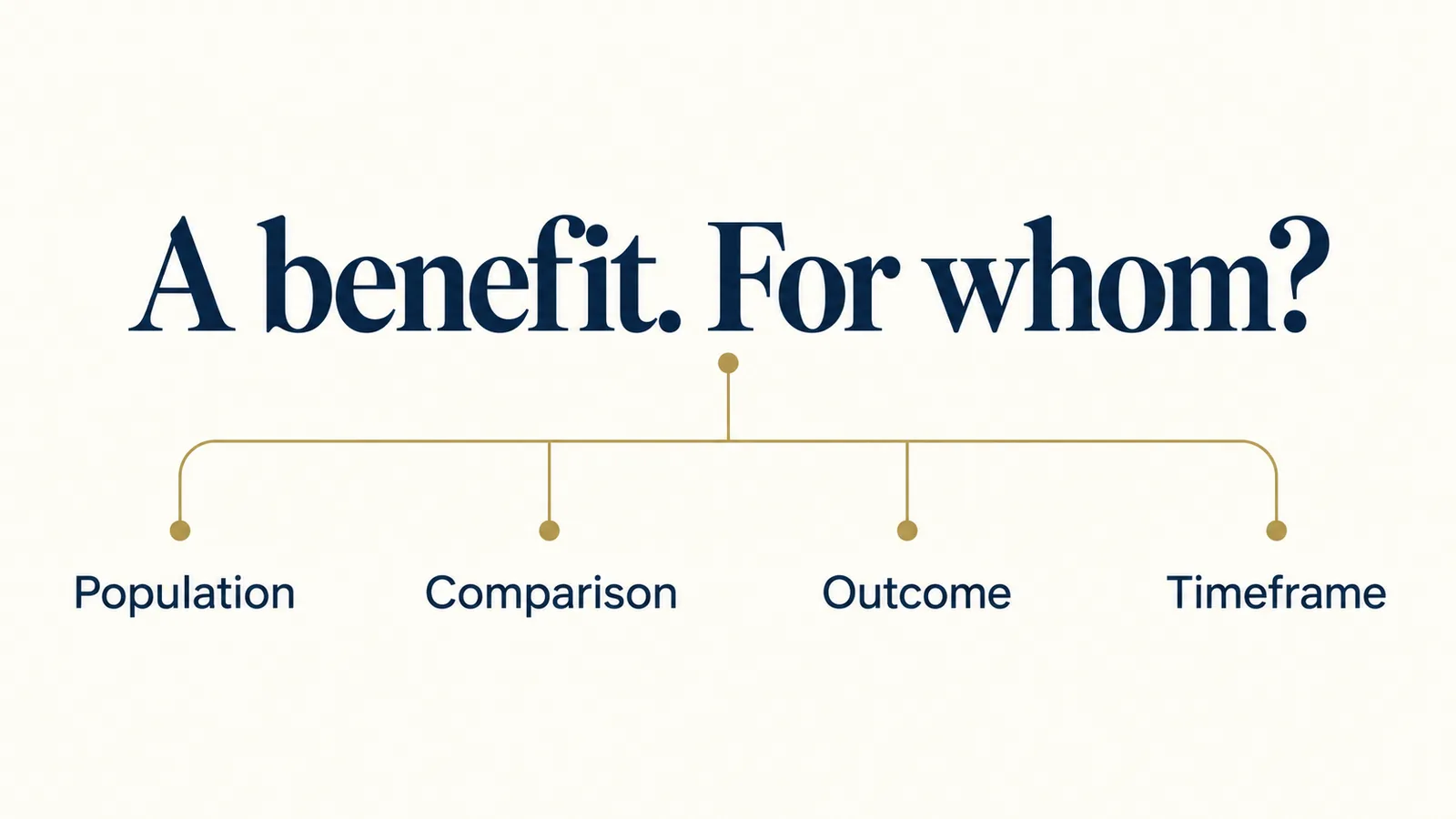
A useful study summary keeps the population, comparison, outcomes, and limitations attached to the claim. Here is a practical reading sequence, with a published trial example.
Quick answer
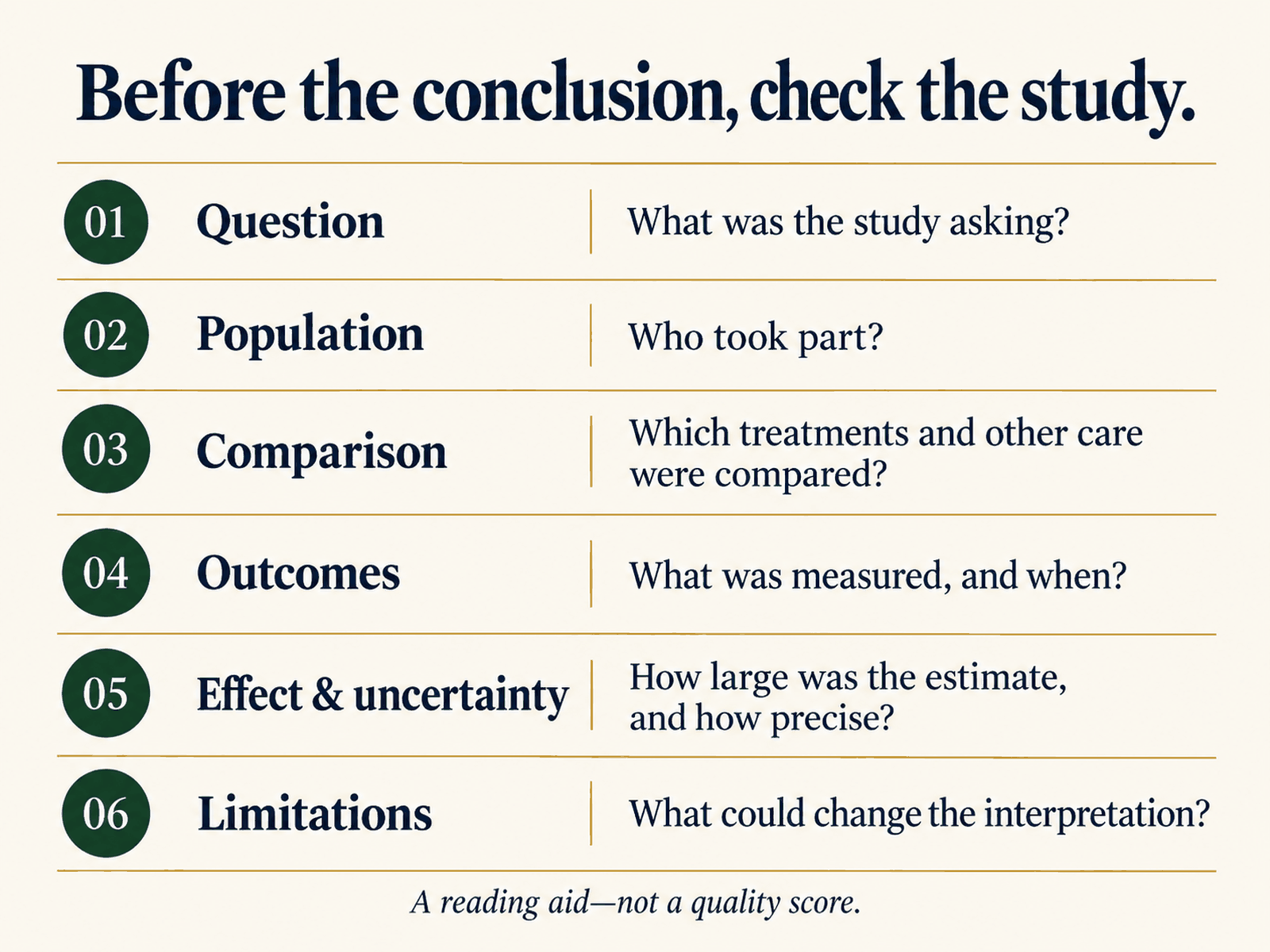
When reading a medication study, identify who took part, what was compared, which outcomes were measured, and over what period. Then inspect effect estimates, uncertainty, harms, and limitations before deciding whether the paper supports your wording.
Have an article or manuscript to review? Request a Review Quote.
Reading a medication study starts before the headline result. Who took part? What was compared? What outcome was measured, and over what period? Those details decide how far the conclusion can travel.
Imagine a draft saying, “This medicine protects the kidneys.” The reference may be relevant, yet the sentence still leaves an editor with work to do. Which patients? What counted as protection? Compared with what?
A strong medical article keeps those answers attached to the claim. Here is a practical reading sequence for writers, editors, and teams preparing medication-related content.
1. Write down the study question
Start with one sentence: the study compared this treatment with this alternative, in these people, to measure this outcome over this period.
If you cannot complete that sentence, pause before writing the conclusion. A medicine’s name and a favorable result are not enough to describe what was tested.
Note the design too. Was treatment assigned randomly, or did researchers observe existing care? The design affects which alternative explanations need attention. NHLBI’s assessment tools distinguish randomized trials from observational designs rather than treating every study as interchangeable.[1]
2. Check who was actually studied
Read the eligibility criteria, baseline table, and participant flow. A disease label can cover people with different ages, disease severity, previous treatment, and accompanying conditions.
For a writer, the question is concrete: does the draft describe the people represented in the evidence, or quietly expand the finding to everyone with the condition?
Missing representation does not automatically prove a treatment cannot help another group. It changes what this particular study directly establishes. Cochrane identifies differences in populations and care settings as important when interpreting applicability.[2]
3. Keep the treatment and comparison together
Check the dose, treatment schedule, comparator, and other care participants received. A comparison with placebo does not establish superiority over every available medicine. A treatment added to usual care should not become a claim about using it alone.
Ask what differs between groups besides the assigned intervention. Consider adherence, additional treatment, and how the analysis handled participants who stopped treatment. These questions help explain what the reported comparison means.[1]
4. Read the outcome definition, not just its shorthand
“Kidney benefit,” “heart benefit,” and “improvement” may be convenient labels. They are not complete outcome definitions.
Look for the primary outcome, its measurement, and its timing. Identify whether it describes symptoms, function, survival, a laboratory measure, or a combination of events.
FDA distinguishes outcomes that directly assess clinical benefit from surrogate endpoints used in their place. A change in a marker should not silently become a claim about a different patient outcome.[3]
For a composite outcome, identify its components and examine their individual results. A difference in the combined outcome does not mean every component changed by the same amount, or that each had a separately established benefit.
A worked example: what DAPA-CKD actually examined
The original DAPA-CKD report provides a useful exercise in keeping the claim attached to its study. This is an example of reading a published trial, not a treatment recommendation.
- Participants: 4,304 people with chronic kidney disease, with or without type 2 diabetes. Entry criteria included an estimated glomerular filtration rate of 25–75 mL/min/1.73 m² and a urinary albumin-to-creatinine ratio of 200–5,000 mg/g.
- Comparison: dapagliflozin 10 mg daily versus placebo.
- Primary outcome: a composite covering a sustained decline in estimated filtration of at least 50%, end-stage kidney disease, or death from kidney or cardiovascular causes.
The trial reported a lower occurrence of the primary composite outcome with dapagliflozin.[4]
An editor now has a better question than “Does this medicine protect kidneys?”: does the draft identify the relevant population and measured outcome? A defensible summary preserves those details instead of making a universal promise. Other populations, doses, and treatment comparisons need their own evidence.
That is a practical task for clinical content and manuscript review: checking whether the wording matches what the reference actually supports.
5. Read the size of the effect and its uncertainty
Record the outcome in each group, the follow-up period, the effect measure, and its confidence interval. Do not treat a hazard ratio, risk ratio, and absolute risk reduction as interchangeable.
Statistical significance alone does not describe how important a result is. Likewise, a result that does not cross a significance threshold is not automatic proof that the treatments are equivalent. Cochrane recommends interpreting estimates alongside their uncertainty.[2]
The absolute and relative risk guide explains why the same relative reduction can describe different absolute changes.
6. Ask what could change the interpretation
Review missing data, withdrawals, outcome measurement, treatment changes, and the analysis population. Ask how each issue could affect the answer, rather than counting limitations as though every item carried equal weight.[1]
Read the harms alongside benefits. Check the protocol or registration when assessing whether an outcome was planned. CONSORT 2025 provides reporting guidance for randomized trials, including information that helps readers inspect the study.[5]
Clear reporting makes assessment possible; it does not certify that a trial has no weaknesses. When an important detail is unavailable, name the gap instead of filling it with an assumption.
Before publishing, test your sentence against the source
Return to the sentence you want readers to remember. Does it preserve the population, comparison, outcome, timeframe, and important uncertainty? Does the reference support that sentence, rather than merely discuss the same topic?
The claim-to-reference guide provides another way to check that connection. If the question needs evidence beyond one paper, the targeted literature research guide explains how to define a useful search.
A concise sentence can still be precise. The work is deciding which details the reader needs—not removing every qualification until the claim sounds certain.
Frequently asked questions
Can I assess a medication study from its abstract?
An abstract helps identify the question and main findings. It may not contain the eligibility, methods, harms, or limitations needed for a detailed assessment. Request the full report and relevant supporting material for a clinical manuscript review.
Does statistical significance mean an important benefit?
No. Consider the outcome, size of the effect, uncertainty, and relevance to the reader. The risk explanation guide shows why relative figures need context.
Is clinical manuscript review the same as journal peer review?
No. A commissioned review gives an author or team feedback. A journal arranges its own review process. See the comparison of manuscript review and journal peer review.
Can PCS review the evidence behind our article?
Request a review of your draft and references, or a separate search around your question. Share the topic, length, and deadline to request a review quote. The review report guide shows what useful feedback can include.
References
- NHLBI. Study Quality Assessment Tools.
- Cochrane Handbook. Chapter 15: Interpreting results and drawing conclusions.
- FDA. Surrogate Endpoint Resources for Drug and Biologic Development.
- Heerspink HJL, et al. Dapagliflozin in Patients with Chronic Kidney Disease. N Engl J Med. 2020;383:1436–1446. doi:10.1056/NEJMoa2024816.
- Hopewell S, et al. CONSORT 2025 statement: updated guideline for reporting randomised trials. BMJ. 2025;388:e081123.
Have a draft that needs a clinical review?
Get annotated feedback on medication accuracy, source support, and clinical context. Send your project details and deadline for a quote.
More from the Review
Scroll or swipe to explore related articles. When the article list is focused, use the left and right arrow keys; Home and End jump to the beginning and end.

How to Request a Pharmacist Peer Reviewer for a Medical Journal
A useful peer-review invitation identifies the clinical question, expertise needed, and deadline. Here is what journal editors can send—and how authors can request a separate manuscript review.
Read article : How to Request a Pharmacist Peer Reviewer for a Medical Journal
What a Useful Clinical Review Report Should Include
Clinical feedback is useful when the next decision is clear. Explore the scope, evidence, findings, proposed actions, and handoff a practical review report should contain.
Read article : What a Useful Clinical Review Report Should Include
Medical Literature Research: What a Targeted Review Can—and Cannot—Answer
A focused search can serve a useful purpose without being comprehensive. Understand what targeted literature research can answer, how to describe its limits, and when broader work is needed.
Read article : Medical Literature Research: What a Targeted Review Can—and Cannot—Answer
Clinical Manuscript Review vs. Journal Peer Review
A careful commissioned review can improve a manuscript without becoming journal peer review. Understand the roles, limits, and deliverables before choosing the service.
Read article : Clinical Manuscript Review vs. Journal Peer Review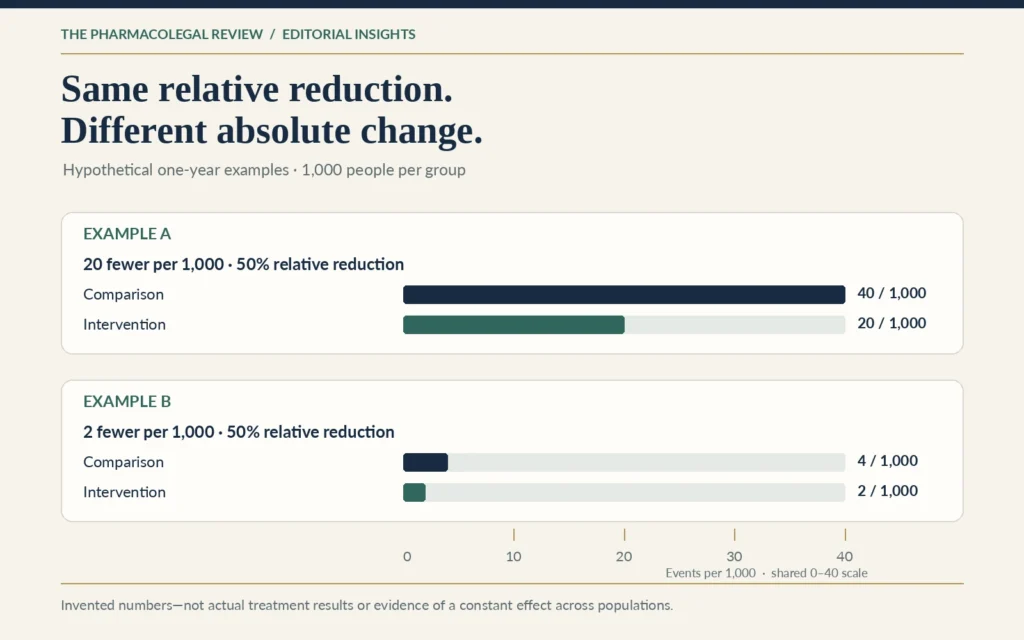
Understanding Absolute and Relative Risk in Medical Articles
A “50% reduction” needs a starting risk and a timeframe. Two clearly labeled hypothetical examples show how absolute and relative measures fit together—and where wording can mislead.
Read article : Understanding Absolute and Relative Risk in Medical Articles
Checking Medical References: Does the Source Support the Claim?
A citation can be relevant without supporting the sentence beside it. A practical guide to matching medical claims with evidence and leaving a useful editorial decision.
Read article : Checking Medical References: Does the Source Support the Claim?