Preparing a Pharmaceutical Consulting Inquiry: Questions, Records, and Scope
You do not need to solve the clinical question before asking for help. Here is what to send PCS to define the assignment and request a proposal.
Quick answer
Start a pharmaceutical consulting inquiry with the question, intended use, available material and volume, preferred deliverable, and deadline. PCS clarifies the assignment and provides a proposal covering deliverables, fee, timing, and payment arrangements. Describe sensitive material before arranging its transfer.
Have a medication-related project? Discuss a Consulting Project.
A pharmaceutical consulting inquiry works best when it starts with the decision you need to make. Tell PCS what you need examined, what you want to receive, and when you need it. You do not need to solve the clinical question before asking for help.
Perhaps your legal team has a large record set and one stubborn question about a medication change. Perhaps your organization needs an evidence summary before revising a clinical resource. Both are consulting projects. They need different starting materials and different deliverables.
PharmacoLegal Consulting Services™ helps turn a medication-related question into a defined assignment. Discuss a Consulting Project with a short description and your deadline. PCS can clarify the work and provide a proposal.
Start with the decision, not the document pile
“Please review these records” leaves the most important question unanswered: review them for what? A better starting point identifies what the analysis needs to help you understand.
For records work, you might need to trace documented medication changes across a hospital stay. For research, you might need a focused summary of evidence for a particular population. For content, you might need clinical review of a treatment explanation before publication.
These are different assignments even when they concern the same medication. Naming the intended use helps identify the right sources, level of detail, and output. Read the medical record review guide for attorneys for the records-specific pathway.
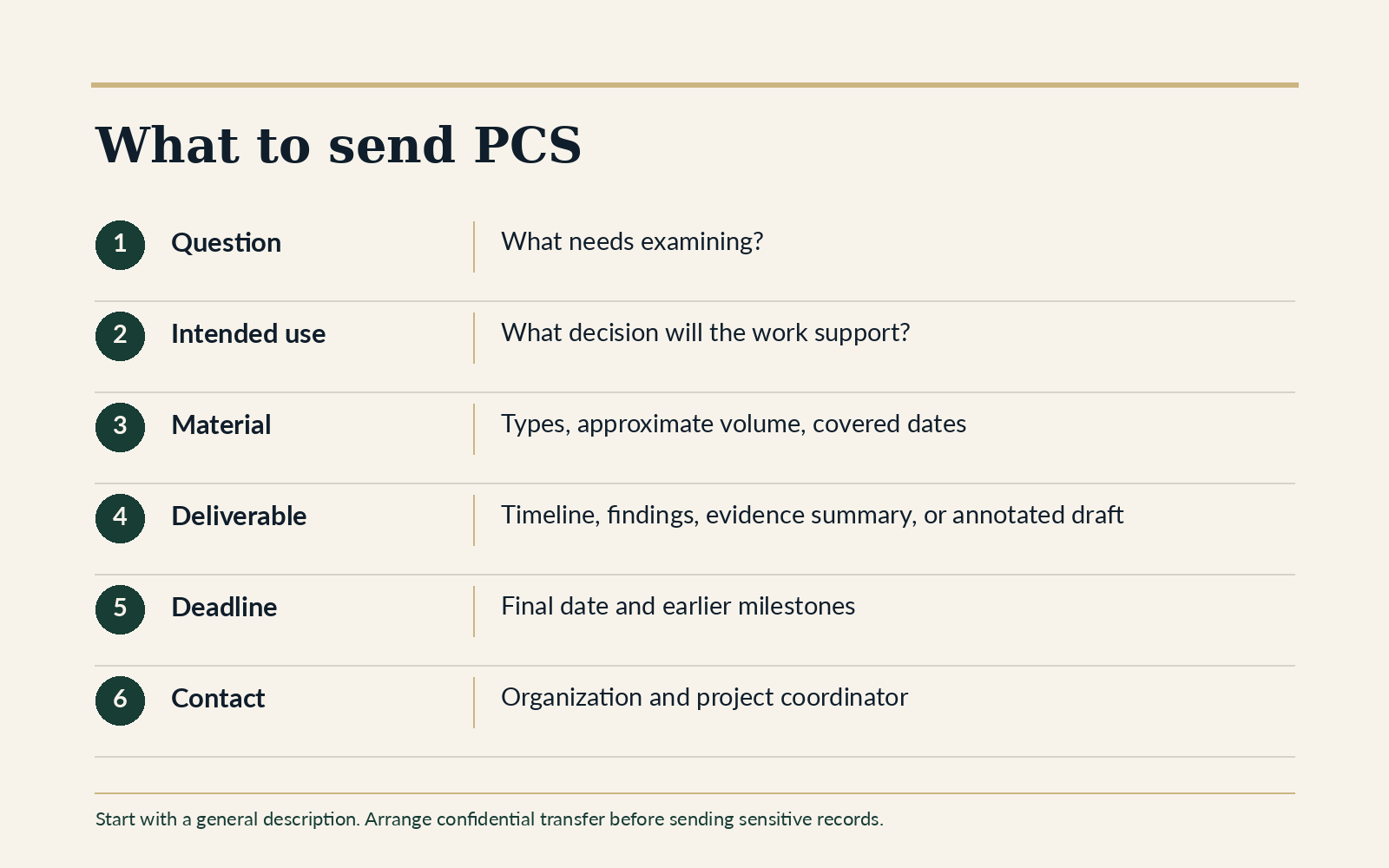
What to include in a pharmaceutical consulting inquiry
- The question: what do you need examined or explained?
- The intended use: internal discussion, a publication, legal-team analysis, or another defined purpose.
- The material: document types, approximate volume, date range, or the research question if there are no records.
- The deliverable: a chronology, findings report, evidence summary, annotated content, or a discussion of which format would help.
- The timing: your deadline and any earlier milestone.
- Your organization and contact: who will coordinate the assignment and approve the proposal?
A page count helps describe the material; it does not describe all the work. A short, inconsistent record set can raise more questions than a longer, well-organized one. If the volume is uncertain, say so. That is useful information.
A short inquiry that gives PCS something to work with
Original illustrative inquiry; not a client engagement.
Our legal team needs a medication chronology covering one hospital admission and the discharge instructions. We have approximately 450 pages, including orders, administration records, progress notes, and a discharge summary. We want source-linked entries, unresolved differences, and questions for follow-up. Our target deadline is three weeks away. Please advise on the next step for a proposal and confidential document transfer.
This message does not argue a conclusion. It identifies the work. PCS can ask a focused follow-up question instead of starting another round of “What exactly do you need?”
A research inquiry can be equally direct: name the population, medication or intervention, question, and intended audience. See the targeted literature research guide for how the question shapes the search.
Choose the output you will actually use
A useful proposal names the deliverable rather than offering an undefined block of consulting time. Consider what your team needs to do next.
- Medication chronology: follow documented events in sequence with source references.
- Findings report: examine defined questions, supporting material, gaps, and follow-up needs.
- Evidence summary: understand the literature relevant to an agreed question, with sources and search boundaries.
- Annotated content: see comments and recommended revisions against an existing draft.
Several outputs can be combined when the assignment calls for them. A chronology and an evidence summary answer different questions; neither should quietly become an open-ended review of everything.
Describe sensitive records before sending them
Use the initial inquiry for a general project description. Do not paste patient information or upload confidential case material into a general contact message. PCS can first establish the appropriate conflict check, confidentiality arrangements, and document-sharing route for the assignment.
Once the transfer arrangements are confirmed, a simple inventory helps: document types, covered dates, source identifiers, and known omissions. Preserve original files and stable page references so findings can be checked against the material supplied.
For medication analysis, comparing different sources matters. AHRQ’s medication reconciliation guidance describes comparing medication information and clarifying discrepancies.[1] That guidance concerns care processes; a retrospective consulting review has its own agreed purpose and should not be presented as the same service.
What happens after the inquiry?
PCS reviews the requested work and asks any questions needed to define it. Straightforward assignments may be clarified by email; a project-fit conversation can help when the question needs discussion.
The proposal should specify deliverables, included material, fee, timeline, revision or follow-up arrangements, and payment terms. It should also explain how additional records or new questions will be handled. Work begins after the agreement and required payment arrangements.
If you are considering testimony, identify that separately. A consulting inquiry does not establish a testimony engagement. The requested role and relevant expertise need their own discussion.
Discuss your consulting project with PCS. A clear first message is enough to begin.
Frequently asked questions
Do I need all the records before requesting a quote?
No. Describe what is available, what is expected, and any known gaps. PCS can clarify whether the assignment can be proposed now or needs more information. The inquiry checklist provides a starting point.
Can PCS help choose the right deliverable?
Yes. Explain the decision you need to make and how your team intends to use the work. For a written assessment, the clinical review report guide illustrates what actionable findings look like.
Can I request research without a patient record set?
Yes. A focused literature assignment starts with a research question rather than patient records. See targeted literature research, then describe your question to PCS.
Is the first inquiry a paid clinical consultation?
The project inquiry establishes what you want to commission. Substantive analysis, document review, and research belong in the agreed paid assignment. Request a proposal for the work you need.
References
- Agency for Healthcare Research and Quality. MATCH Toolkit, Chapter 3: Designing the Medication Reconciliation Process. Used for the distinction between comparing medication information and resolving discrepancies, not as a consulting engagement standard.
Need medication-focused analysis?
Request records analysis or research with a written deliverable tailored to your question. Send your project details and deadline for a quote.
More from the Review
Scroll or swipe to explore related articles. When the article list is focused, use the left and right arrow keys; Home and End jump to the beginning and end.
What Medication Records Can—and Cannot—Establish
An order, a claim, and a clinical note do not establish the same thing. Learn how a focused review separates documented findings from unresolved questions.
Read article : What Medication Records Can—and Cannot—Establish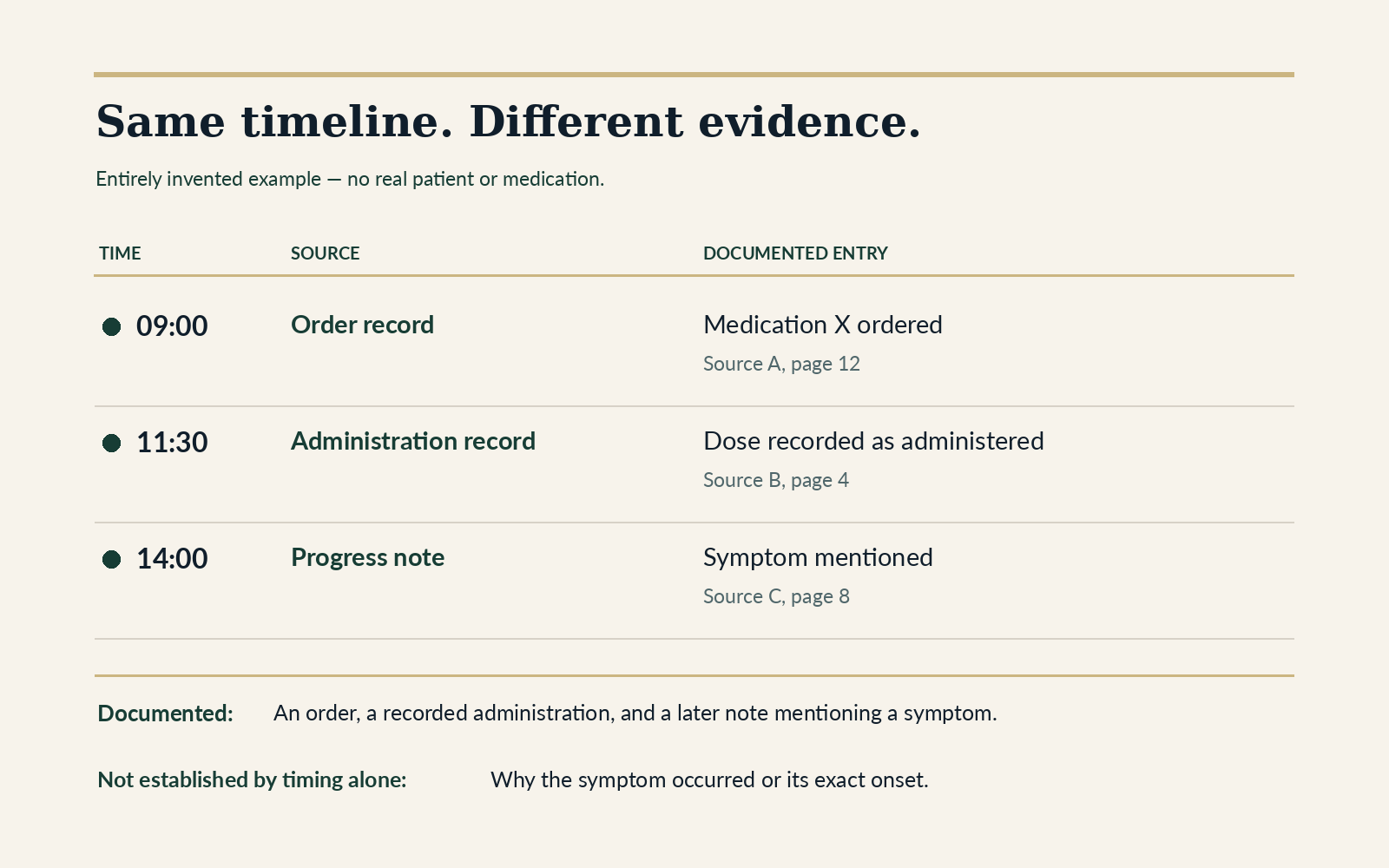
Medication Timelines: Separating Documented Events from Interpretation
An order, a recorded dose, and a later symptom note tell different parts of a story. A useful medication chronology keeps those distinctions visible.
Read article : Medication Timelines: Separating Documented Events from Interpretation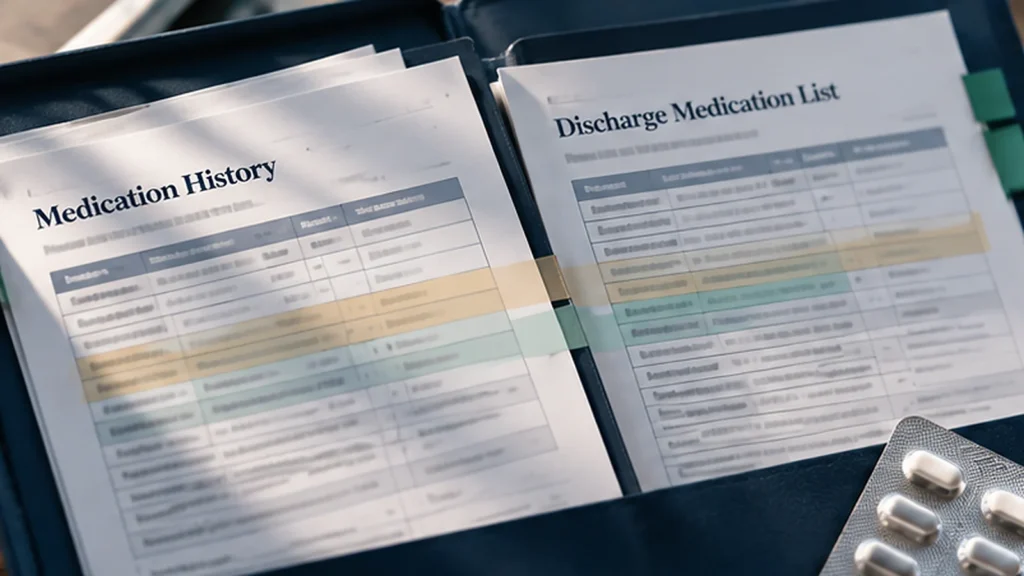
Pharmacist Medical Record Review for Attorneys: What to Expect
Medication entries tell different parts of a clinical story. See how a focused records review can organize the documented events, discrepancies, and questions your legal team needs to examine.
Read article : Pharmacist Medical Record Review for Attorneys: What to ExpectPatient Education Writing Services: What to Commission and What You Receive
A patient resource needs more than accurate sentences. See how to commission clear, referenced materials built around your audience and their next step.
Read article : Patient Education Writing Services: What to Commission and What You Receive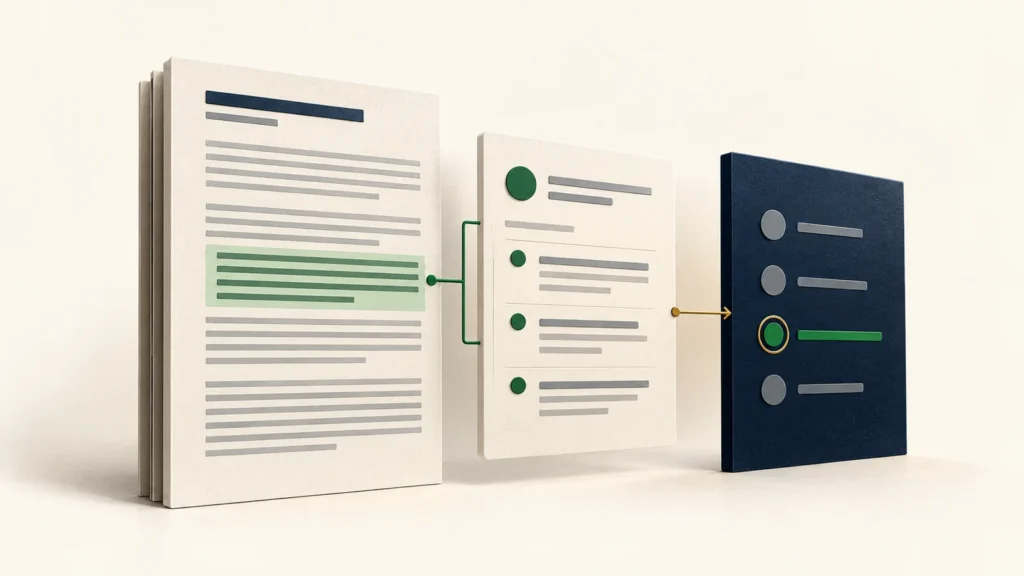
How to Request a Pharmacist Peer Reviewer for a Medical Journal
A useful peer-review invitation identifies the clinical question, expertise needed, and deadline. Here is what journal editors can send—and how authors can request a separate manuscript review.
Read article : How to Request a Pharmacist Peer Reviewer for a Medical Journal
Updating Medical Website Content: What to Review, Rewrite, or Retire
An older medical article may need a targeted correction, a full rewrite, or a different place in the site. Use a practical review process to decide what changes and who handles the update.
Read article : Updating Medical Website Content: What to Review, Rewrite, or Retire