Pharmacist Medical Record Review for Attorneys: What to Expect
Medication entries tell different parts of a clinical story. See how a focused records review can organize the documented events, discrepancies, and questions your legal team needs to examine.
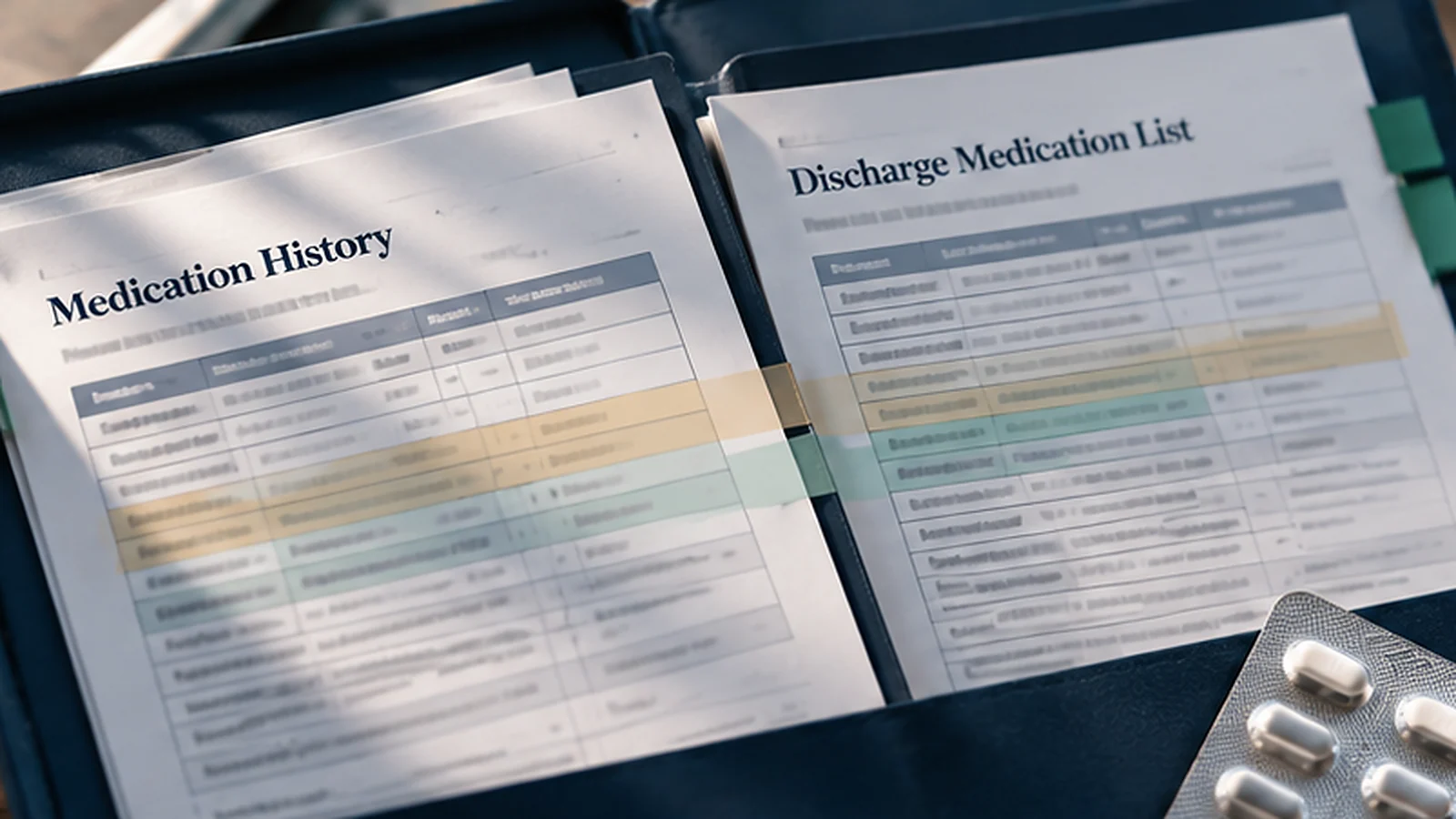
Quick answer
Pharmacist medical record review examines medication-related documents around a defined question. Deliverables can include a source-linked chronology, written findings, discrepancies, and follow-up questions. Start with the clinical question, record volume and period, intended deliverable, and deadline.
Have a medication-related project? Discuss a Consulting Project.
Pharmacist medical record review helps attorneys understand the medication-related information in a matter: what the records document, where entries differ, and which questions need closer examination.
A medication name may appear in an admission history, a prescribing order, an administration record, and a discharge summary. Those entries can describe different parts of the story. Reading them as though they all establish the same event can send an investigation in the wrong direction.
PharmacoLegal Consulting Services™ provides medication-focused records analysis and pharmaceutical consulting. A defined assignment can produce a source-linked medication chronology, written findings, and questions for follow-up. Discuss a Records Review with the clinical question, record volume, and deadline.
Start with the question your legal team needs answered
Useful starting questions are specific. What do the available records show about a medication change? Which documents address the treatment during a transfer? Do the medication lists agree, and what information might explain a difference?
The question determines which records and clinical references the review needs. An assessment of a defined medication issue can begin with a different set of documents than a broad chronology covering several years.
State the intended deliverable too. Your team may need a chronology, an explanation of medication terminology, a list of discrepancies, a written analysis, or a focused discussion of the findings.
Which records can help?
The relevant documents depend on the assignment. They may include:
- Medication histories and reconciliation records: what was reported or listed at admission, transfer, or discharge.
- Orders and changes: the medication, instructions, and documented revisions.
- Administration records: recorded administrations and any documented held, refused, or omitted doses.
- Dispensing records: information about medication supplied by a pharmacy.
- Clinical notes and relevant tests: the context for medication decisions, monitoring, and reported events.
- Discharge and follow-up material: instructions and subsequent documentation within the review period.
An order, a dispensing entry, and a recorded administration address different events. Identify which event the source actually documents before placing it in the chronology.
AHRQ’s MATCH toolkit describes comparing medication information across transitions in care to identify discrepancies.[1] Its clinical framework helps explain why several medication-related documents may need to be read together. It is not a test for legal liability.
Build a chronology that stays attached to its sources
A useful medication chronology identifies the event date and time when available, the document and page or entry location, the recorded medication information, and any question raised by the entry.
Distinguish the time of the described event from the time a note was entered when the record provides both. Preserve the original wording where it matters, and mark uncertain or missing information clearly.
A gap in the supplied records is a reason to identify what is missing and ask a follow-up question. It does not automatically establish what happened outside those records.
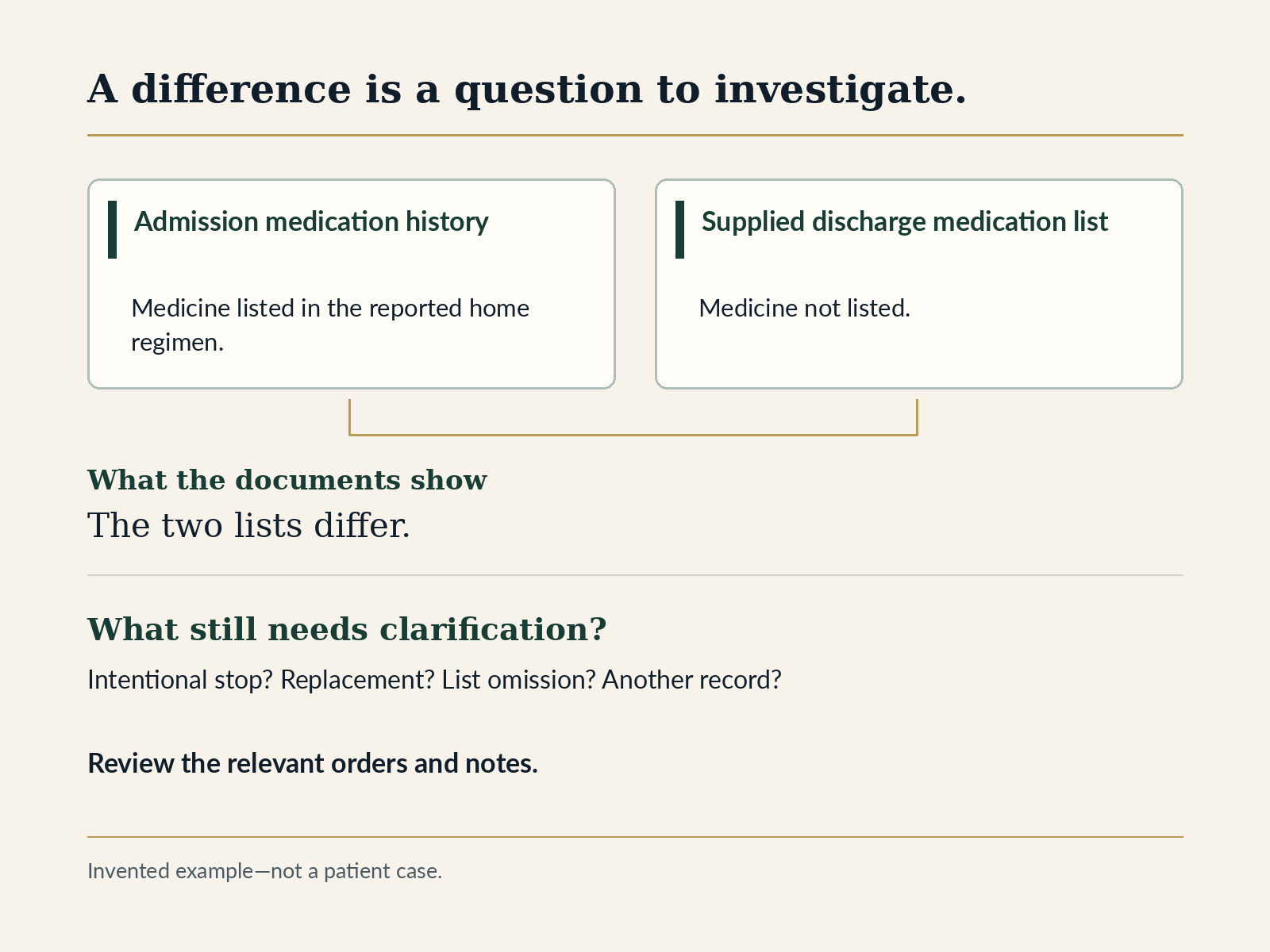
An example: two entries, one unresolved question
Invented demonstration of records analysis. These entries do not describe a patient, medicine, client, or legal matter.
- Document A
- An admission medication history lists a medicine as part of the reported home regimen.
- Document B
- The discharge medication list supplied for review does not include that medicine.
- What can be recorded?
- The medicine appears on the admission history and is absent from the supplied discharge list.
- What remains unresolved?
- Whether it was intentionally stopped, replaced, omitted from the list, or addressed in another document.
- Next review step
- Examine the relevant orders and notes, and identify any additional records needed to clarify the change.
The finding gives counsel a precise starting point. It preserves the difference between a documented discrepancy and an explanation that still needs support.
Read the medication information in clinical context
Medication decisions may relate to the patient’s condition, other treatments, relevant test results, or the care setting. A review should identify the context available in the supplied material and the clinical questions it raises.
If an event followed medication use, examine the timing alongside other possible explanations and the applicable evidence. Sequence alone does not settle why the event occurred.
FDA makes a related distinction for its adverse-event reporting dashboard: a report concerning a medicine does not itself establish that the medicine caused the reported event.[2] That limitation applies to those reports; it is a useful reminder to examine what each source can actually establish.
What should an attorney receive?
The proposal should define the question, records, review period, and format of the work. A practical deliverable can include:
- A source-linked medication chronology showing the relevant recorded events.
- Written findings explaining the medication issues and the evidence considered.
- Discrepancies and gaps identified without silently resolving them through assumptions.
- Follow-up questions and additional records that may help clarify the matter.
Agree whether the assignment also includes literature research or a discussion of the findings. The targeted literature research guide explains how to define a research question when records alone cannot answer it.
How to request a medication-related records review
Start with a general description of the matter, the medication-related question, approximate record volume and date range, intended deliverable, and deadline. Identify whether you need consulting analysis or want to discuss a potential testimony assignment.
Use the first inquiry to describe the work. Arrangements for conflicts review, confidentiality, and sharing records should be established before substantive review begins.
PCS clarifies the assignment and provides a proposal covering the deliverables, fee, timing, and payment arrangements. Work begins after agreement and the required payment arrangements.
Discuss a Records Review. Give your team a defined route from a clinical question to an organized analysis.
Frequently asked questions
Can an attorney request a focused medication review?
Yes. Begin with the clinical question, the approximate record volume, and your deadline. Use the consulting inquiry to describe the assignment before sending records.
Does a missing medication entry prove a dose was not given?
A missing entry in the material supplied does not by itself resolve what occurred. Identify the document, relevant period, and any additional source needed. The worked example shows how to distinguish an observed gap from an explanation.
Is a records review the same as expert testimony?
No. Consulting records analysis and testimony are separate assignments. If testimony is being considered, discuss the matter, requested role, relevant expertise, and requirements with PCS and counsel. The consulting inquiry does not establish acceptance or qualification for a testimony role.
Can you research the medication evidence as well?
A defined literature research task can be proposed alongside the records work. Read the literature research guide and include your question when you discuss the project.
References
- Agency for Healthcare Research and Quality. Medications at Transitions and Clinical Handoffs (MATCH) Toolkit for Medication Reconciliation; Chapter 3: Designing the Medication Reconciliation Process.
- U.S. Food and Drug Administration. FDA Adverse Event Monitoring System (AEMS) Public Dashboard. See limitations of the reporting data.
Need medication-focused analysis?
Request records analysis or research with a written deliverable tailored to your question. Send your project details and deadline for a quote.
More from the Review
Scroll or swipe to explore related articles. When the article list is focused, use the left and right arrow keys; Home and End jump to the beginning and end.
What Medication Records Can—and Cannot—Establish
An order, a claim, and a clinical note do not establish the same thing. Learn how a focused review separates documented findings from unresolved questions.
Read article : What Medication Records Can—and Cannot—Establish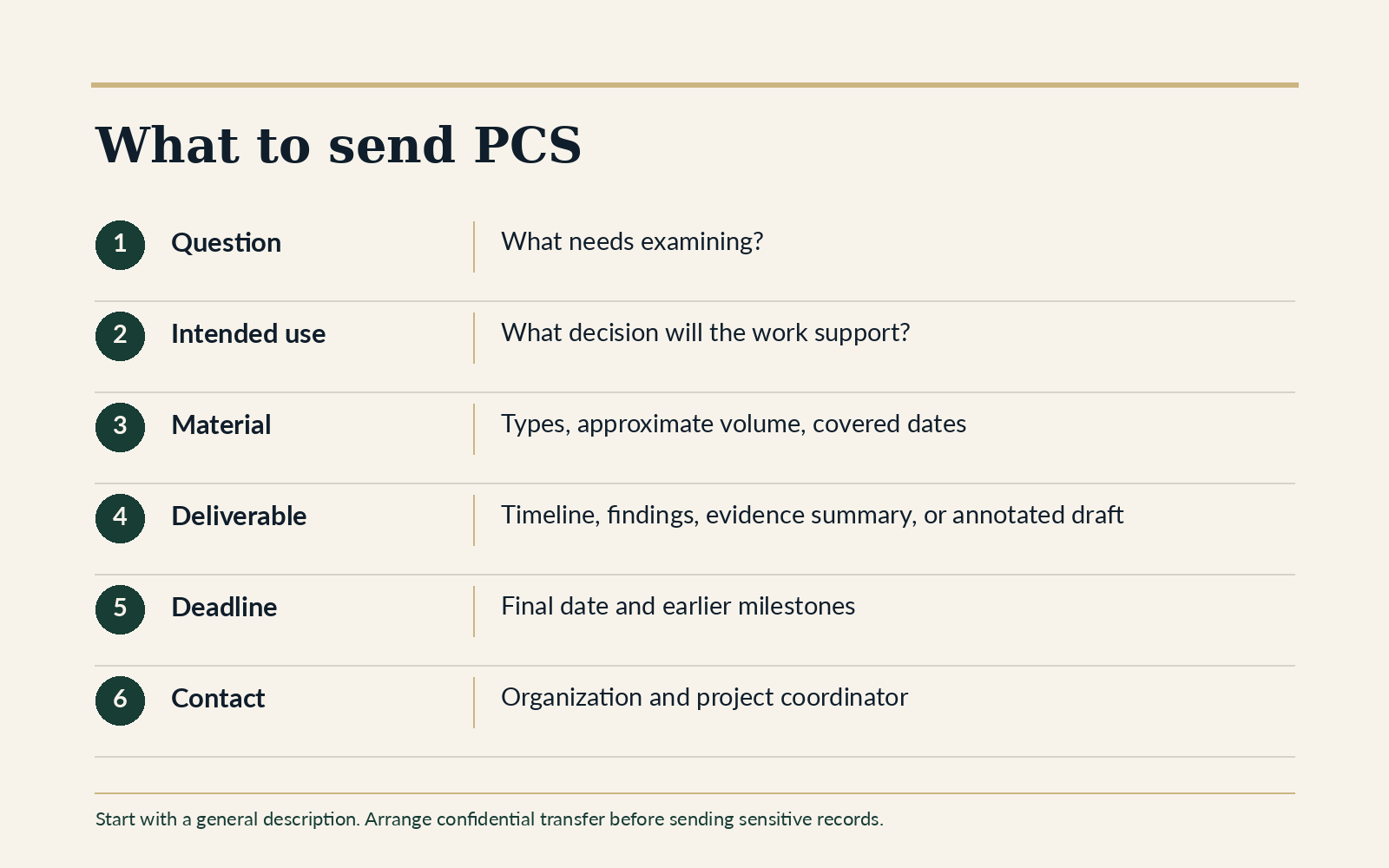
Preparing a Pharmaceutical Consulting Inquiry: Questions, Records, and Scope
You do not need to solve the clinical question before asking for help. Here is what to send PCS to define the assignment and request a proposal.
Read article : Preparing a Pharmaceutical Consulting Inquiry: Questions, Records, and Scope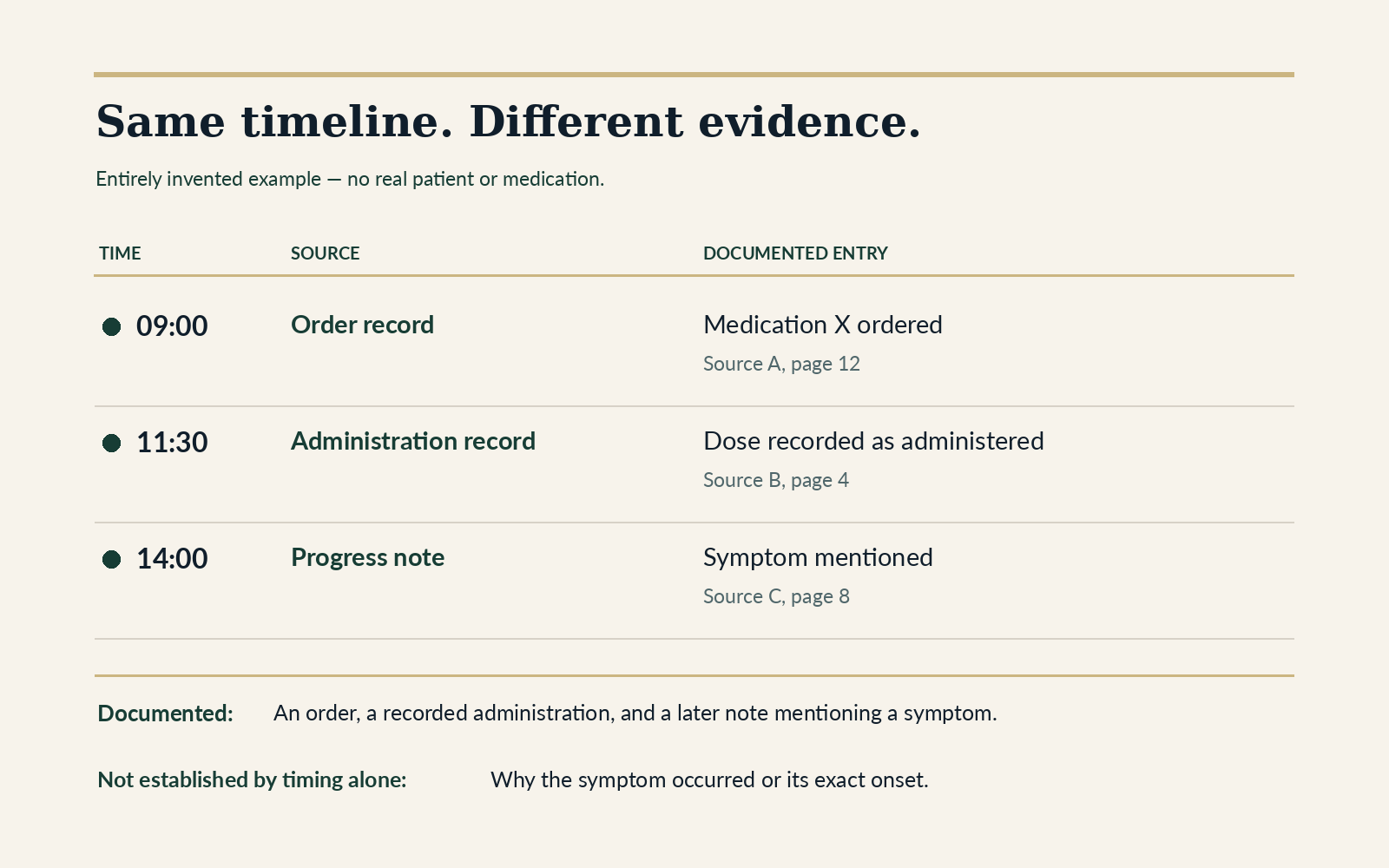
Medication Timelines: Separating Documented Events from Interpretation
An order, a recorded dose, and a later symptom note tell different parts of a story. A useful medication chronology keeps those distinctions visible.
Read article : Medication Timelines: Separating Documented Events from InterpretationPatient Education Writing Services: What to Commission and What You Receive
A patient resource needs more than accurate sentences. See how to commission clear, referenced materials built around your audience and their next step.
Read article : Patient Education Writing Services: What to Commission and What You Receive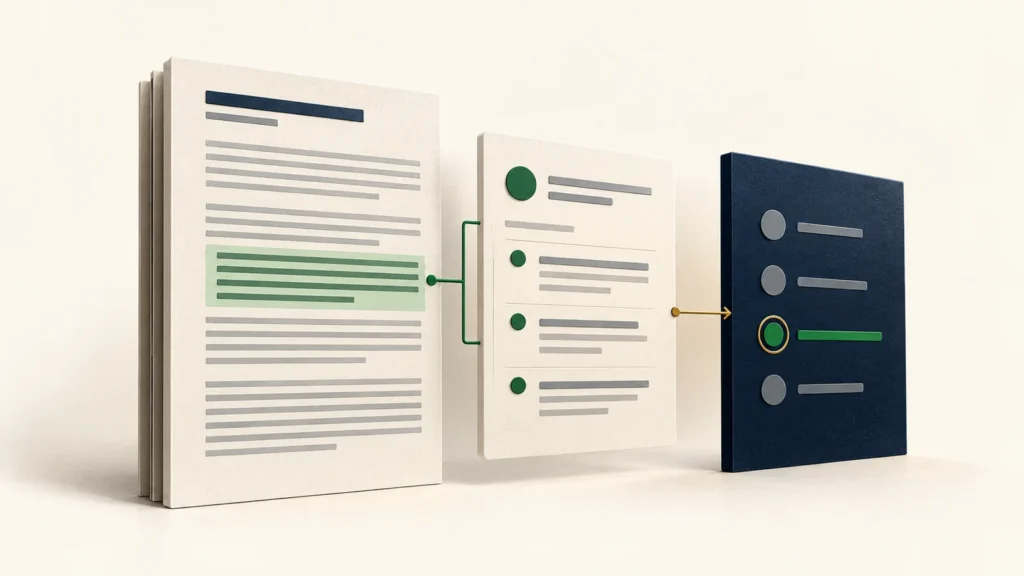
How to Request a Pharmacist Peer Reviewer for a Medical Journal
A useful peer-review invitation identifies the clinical question, expertise needed, and deadline. Here is what journal editors can send—and how authors can request a separate manuscript review.
Read article : How to Request a Pharmacist Peer Reviewer for a Medical Journal
Updating Medical Website Content: What to Review, Rewrite, or Retire
An older medical article may need a targeted correction, a full rewrite, or a different place in the site. Use a practical review process to decide what changes and who handles the update.
Read article : Updating Medical Website Content: What to Review, Rewrite, or Retire