From Clinical Evidence to Clear Patient Education
Making clinical evidence easier to read is only the start. Explore how patient education can preserve qualifications, explain numbers, and serve a clear reader purpose.
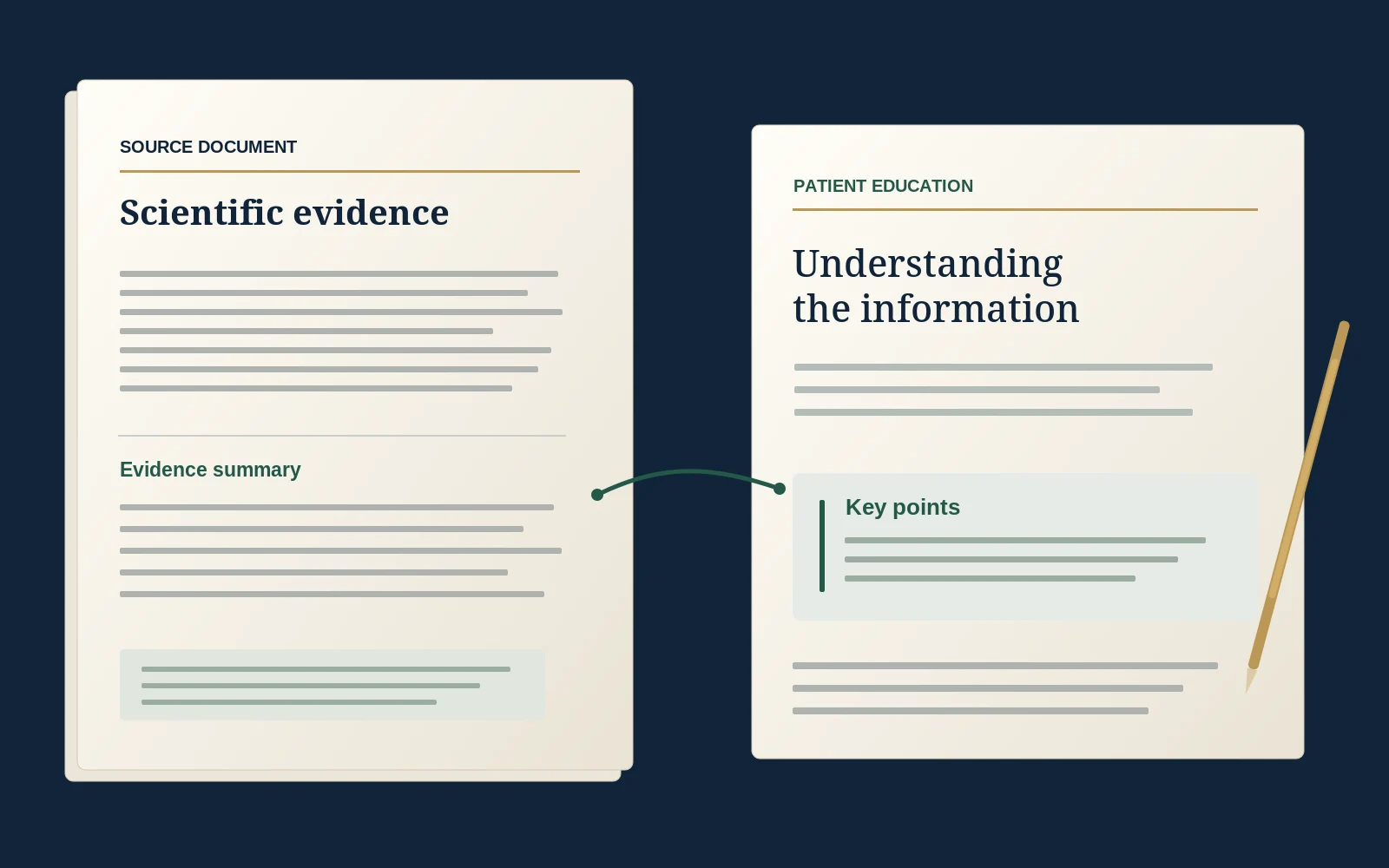
Quick answer
Clear patient education starts with the reader’s question, checks what the evidence supports, explains necessary terms and numbers, and retains important qualifications. Review the headline, body, visuals, and next steps together; readability alone does not establish clinical accuracy.
Clear patient education starts before a technical term gets replaced. It starts with deciding what the evidence can support—and what the person reading needs to understand.
Imagine a team with a well-referenced clinical summary and a simple request: “Can we make this patient-friendly?” The draft gets shorter. The sentences get lighter. Then someone notices that the qualification explaining who was studied has disappeared.
The piece is easier to read. Its meaning has changed.
This is an illustrative editing scenario, not a report of a patient or client encounter. It captures the central challenge: translating clinical evidence requires decisions about meaning, not just vocabulary.
Begin with the patient’s question
A research paper is organized around a scientific question. An educational article needs a clear reason for its reader to be there.
Is the reader trying to understand a word used at an appointment, compare general concepts, or prepare questions for a care discussion? Those purposes call for different openings and different levels of detail.
CDC’s Clear Communication Index asks communicators to identify the primary audience, health-literacy considerations, communication objective, and main message.[1] For an editorial team, those questions provide a useful starting point before drafting.
“Explain this study” and “help readers understand this treatment concept” are not the same assignment. Establish which one the publication is meant to accomplish.
Keep the evidence boundary in view
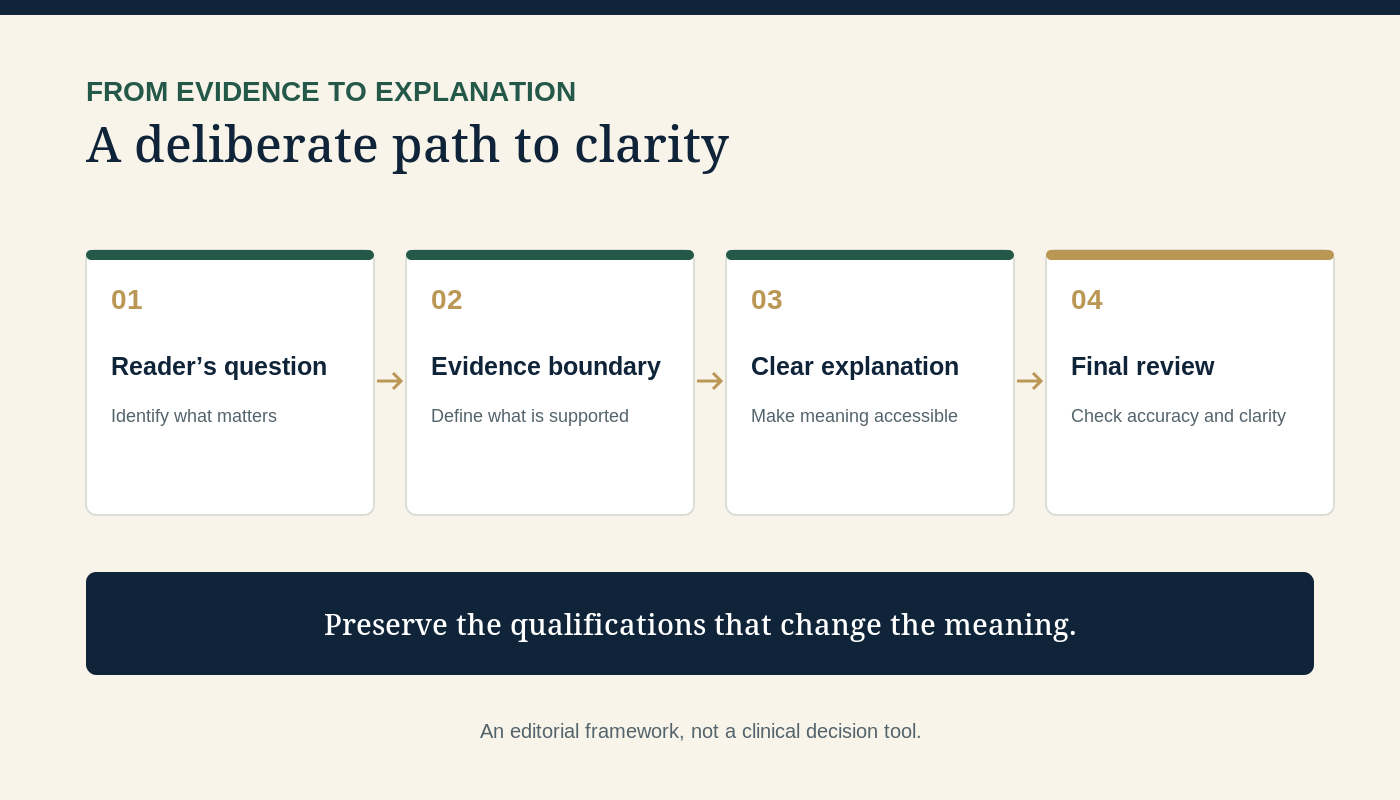
Before adapting a finding, establish what it actually describes. Identify the population, intervention, comparator, outcome, and timeframe relevant to the statement. Note the limitations that materially affect its interpretation.
A reported change in one measured outcome should not quietly become a claim about a broader benefit. A finding in a defined study group should not become an unrestricted statement about everyone.
The patient-facing version does not necessarily need every methodological detail. It needs the details whose absence would leave a materially different impression.
A practical technique is to write a short evidence note before drafting: “This source supports this statement, within these conditions.” That note is an editorial aid, not a substitute for reading the source. It gives the team something concrete to check as the wording evolves.
Explain the necessary term without losing its meaning
Sometimes the unfamiliar word is the reason the reader opened the article. Removing it entirely can make the explanation less useful.
A writer can introduce a necessary term, explain it in familiar language, and use it consistently. What matters is whether the explanation preserves the concept. A friendly phrase that creates the wrong association is not an improvement.
Consider the invented phrase “a positive result.” Without context, a reader may understand “positive” as good news. A useful explanation would say what result is being discussed and what it does—and does not—establish. The right wording depends on the actual subject and evidence.
That is the work: recognize the assumption a reasonable reader might make, then decide whether the article needs to address it.
Put numbers where their meaning can be understood
Numbers can appear precise while leaving the important question unanswered. What does the figure describe? Compared with what? Over which period? Is it a result for a study group or an estimate about an individual?
CDC’s guidance emphasizes explaining numbers in context rather than assuming that the number alone communicates its significance.[2]
A patient article may need a short explanation alongside a figure, or a carefully designed graphic with an accessible text equivalent. It should not replace uncertainty with a reassuring illustration or use a percentage as decoration.
Keep the number, comparator, and explanation consistent across the headline, body, caption, and visual. A precise paragraph cannot repair an overstated graphic that readers encounter first.
Check understandability and usefulness separately
A person can understand a sentence and still not know what to do with the information. They can also see a prominent instruction without understanding how it applies.
AHRQ’s Patient Education Materials Assessment Tool provides separate assessments of understandability and actionability.[3] That distinction helps an editorial team ask two different questions: can the reader follow the explanation, and does the material make its intended use clear?
Neither an assessment score nor a low reading grade establishes that the clinical claims are accurate. Communication assessment and clinical review contribute different checks.
For general educational content, the intended use might be understanding a concept or preparing a question—not making a treatment decision without professional guidance. State that purpose clearly.
Review the whole reader experience
Clear patient education is not confined to the body copy. Titles, pull quotes, diagrams, captions, and highlighted boxes all make claims.
A practical review can follow the reader’s likely path:
- Headline: does it promise more than the evidence establishes?
- Opening: does it answer the question the reader arrived with?
- Explanation: are necessary concepts introduced before they are used?
- Qualifications: can the reader recognize the important limits?
- Visuals: do their labels and emphasis match the text?
- Next step: does the article make its educational purpose clear?
Where feasible, feedback from intended readers can reveal questions that an expert team no longer notices. Any feedback exercise should be described according to what actually happened, rather than labeled “patient-tested” without a defined process.
What to ask for when commissioning the work
Specify the reader, the question, the publication format, the source expectations, and the required deliverable. Explain whether the assignment includes new research, writing, adaptation, clinical review, or a combination.
For a closer look at those distinctions, see how writing, editing, and clinical review differ. For audience choices, explore writing for physicians and patients.
The aim is not to make the science sound smaller. It is to give the reader a clear explanation whose meaning remains faithful to the evidence.
Frequently asked questions
Does plain language mean leaving out the limitations?
No. Relevant limitations need an understandable explanation. Which details belong depends on the article’s purpose and the consequences of leaving them out. Clinical content review can help assess those questions within an agreed scope.
Should every patient article include a numerical example?
Only when the number helps explain the subject and is supported appropriately. An invented numerical example must be clearly labeled as illustrative. There is no reason to add statistics simply to make an article appear more authoritative.
Can an existing clinical article be adapted for patients?
Yes, but adaptation may require a different structure, explanation, and emphasis. It is not necessarily a shorter version of the original. See how audience changes medical writing.
What should a patient-education writing brief include?
Include the intended reader, question to answer, source requirements, format, deadline, review process, and desired deliverable. The medical writing brief guide provides a practical starting point.
References
- Centers for Disease Control and Prevention. How to Use the Index.
- Centers for Disease Control and Prevention. Does the Material Always Explain What the Numbers Mean?.
- Agency for Healthcare Research and Quality. How To Use the PEMAT To Assess a Material.
Need medical content written for your audience?
Commission a researched article or educational piece with supporting references and an agreed revision scope.
More from the Review
Scroll or swipe to explore related articles. When the article list is focused, use the left and right arrow keys; Home and End jump to the beginning and end.

Common Accuracy Problems in Medication Content
A polished medication article can still imply more than its evidence supports. Six practical review targets reveal where meaning can shift—and how to document a useful correction.
Read article : Common Accuracy Problems in Medication Content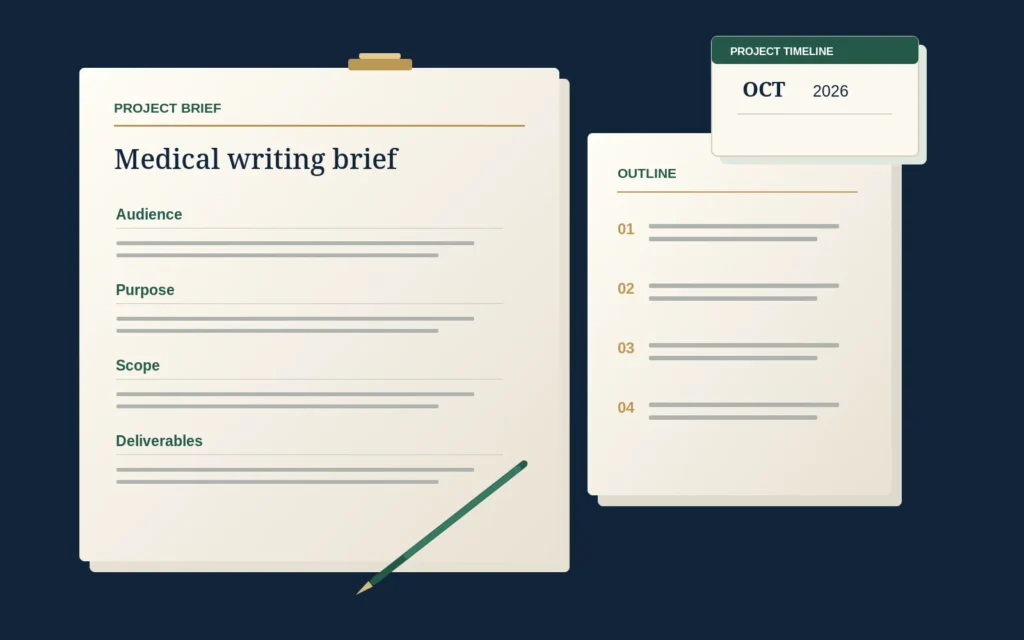
What to Include in a Medical Writing Brief
A topic, word count, and deadline are the beginning of a conversation. Use this practical guide to define the writing assignment before assumptions become revisions.
Read article : What to Include in a Medical Writing Brief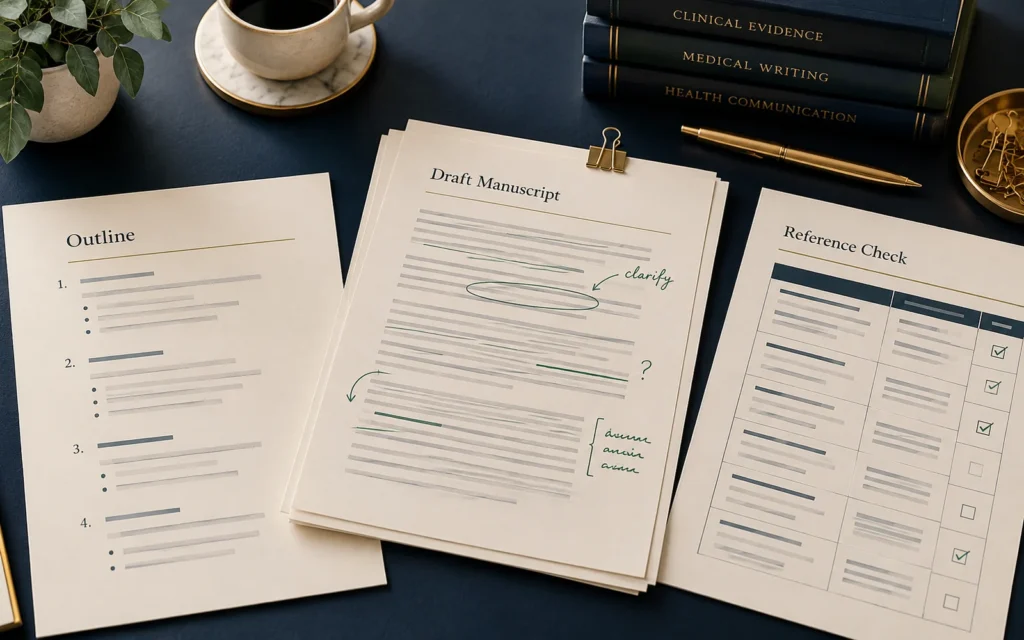
Medical Writing, Editing, and Clinical Review: Which Does Your Project Need?
“Please polish” can conceal three different assignments. Learn how writing, editing, and clinical review differ—and how to commission the work your document actually needs.
Read article : Medical Writing, Editing, and Clinical Review: Which Does Your Project Need?
Writing Medical Articles for Physicians and Patients: What Changes?
The same evidence can serve different readers without becoming the same article. Explore how audience changes structure, terminology, and clinical explanation.
Read article : Writing Medical Articles for Physicians and Patients: What Changes?
What Does a Pharmacist Review in Medical Content?
A polished sentence can still need a clinical correction. Explore what a pharmacist reviews in medical content, how useful feedback looks, and what a client should receive.
Read article : What Does a Pharmacist Review in Medical Content?
What a Useful Clinical Review Report Should Include
Clinical feedback is useful when the next decision is clear. Explore the scope, evidence, findings, proposed actions, and handoff a practical review report should contain.
Read article : What a Useful Clinical Review Report Should Include