Writing Medical Articles for Physicians and Patients: What Changes?
The same evidence can serve different readers without becoming the same article. Explore how audience changes structure, terminology, and clinical explanation.

Quick answer
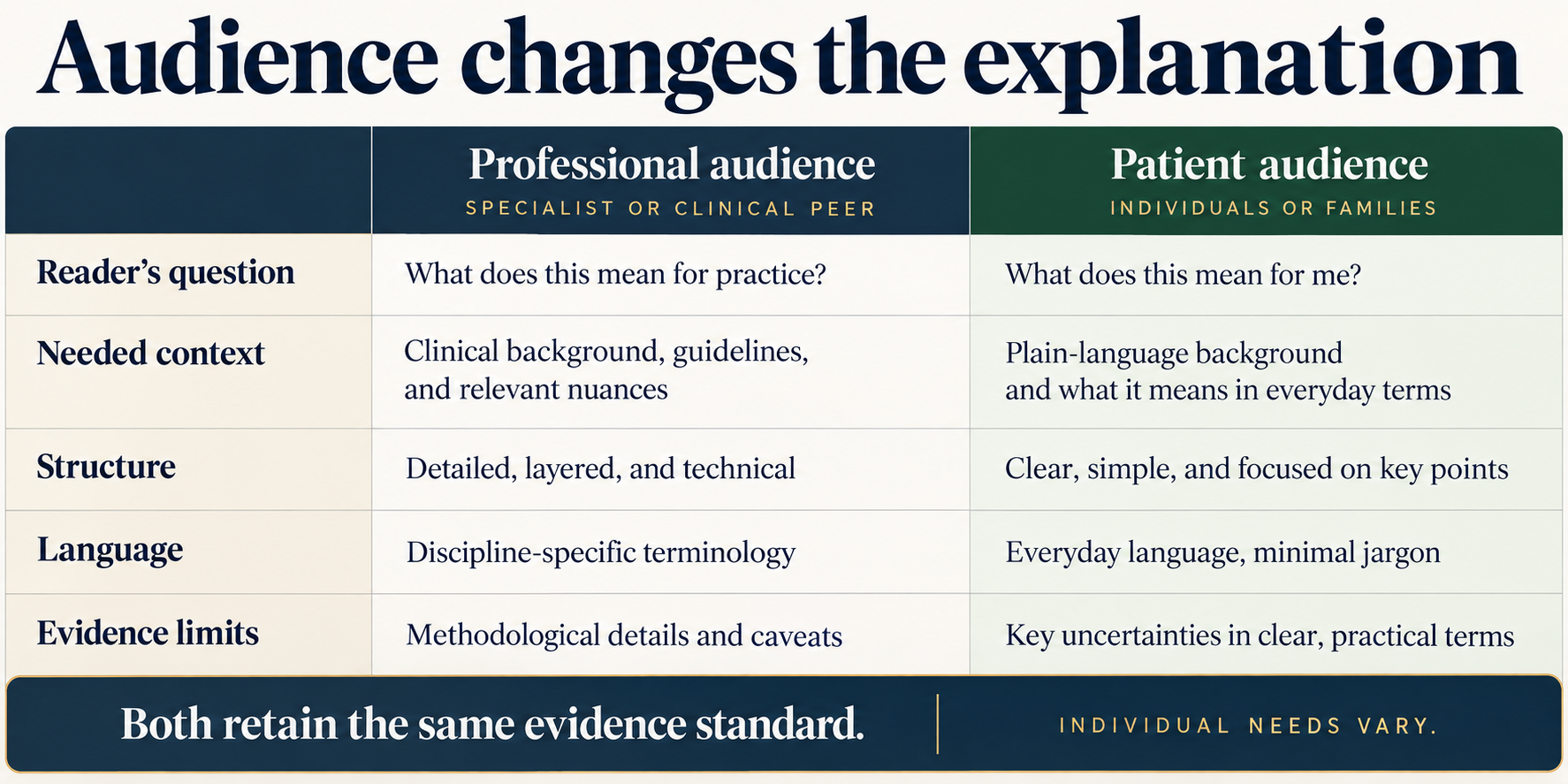
Writing medical articles for physicians and patients requires different editorial choices about the reader’s question, structure, terminology, numerical context, and practical purpose. The evidentiary standard stays the same: each version should accurately represent its sources and retain important qualifications.
Writing medical articles for physicians and patients starts with the same obligation: get the evidence right. What changes is the work the reader needs that evidence to do.
Imagine two people opening articles about the same medicine. A physician wants to understand how a study might inform a clinical discussion. A patient wants to understand a term that appeared during an appointment. Both deserve accuracy. They do not need the same opening paragraph.
This is where audience-specific medical writing becomes more than a vocabulary exercise. Replacing technical words is only part of the job. The writer also has to decide what to explain first, which details need context, and where an important qualification belongs.
The same subject can answer a different question
A topic is not yet a brief. “Write about a new medication” leaves the most consequential editorial decisions unresolved.
For a physician-facing piece, the central question might concern the study population, comparator, outcome, or limits of the evidence. For a patient article, it might concern what a term means, why a particular question matters, or what to discuss with the care team.
These are illustrative purposes, not fixed rules for every reader. A specialist may need an accessible introduction to an unfamiliar field. A patient may want a detailed explanation of the research. Start with the reader’s actual task rather than an assumption about their ability.
CDC’s Clear Communication Index begins by identifying the primary audience, health-literacy considerations, communication objective, and main message.[1] Those questions belong in the commissioning brief, before the first draft.
Change the structure, not just the terminology
For a professional reader assessing evidence, it may make sense to establish the clinical question and study context early. For a patient reader trying to understand an unfamiliar phrase, a useful opening may explain the phrase before introducing research methods.
The order matters because readers use the opening to decide what kind of information they have found. If the article promises an explanation but begins with an unexplained statistical result, it asks the reader to do the writer’s organizing work.
A practical outline can identify three things: the question the reader arrives with, the explanation they need next, and the limits they must not miss. Everything else has to earn its place.
Keep the necessary terms—and explain their job
Plain language does not mean removing every medical term. Sometimes the term is exactly what the reader came to understand.
A patient article can introduce a necessary word, explain it in familiar language, and use it consistently. A professional article can retain precise terminology without stacking unnecessary abbreviations into every sentence.
AHRQ’s Patient Education Materials Assessment Tool distinguishes understandability from actionability.[2] That distinction is useful: a reader may understand a paragraph and still not know what, if anything, they should do with the information. Conversely, a prominently displayed instruction may still be too vague to use.
An assessment framework can help identify communication problems. It does not, by itself, verify the clinical accuracy of the statements being assessed.
An example: one research statement, two editorial tasks
Consider this invented sentence:
“The treatment improved the primary endpoint.”
For a physician-facing article, a useful expansion would identify the endpoint, population, comparator, magnitude of the finding, and relevant uncertainty. “Improved” is not enough to evaluate the result.
For a patient-facing article, the writer may first need to explain what the researchers measured and why it matters. If the outcome does not directly establish the benefit the reader might assume, that distinction needs to remain visible.
Neither version should invent information missing from the source. The audience changes the explanation; it does not expand what the evidence establishes.
Numbers need context in both versions
Technical fluency is not permission to present a percentage without its denominator, comparator, or timeframe where those details are necessary to understand the claim.
A patient article may benefit from an explanation in familiar terms alongside the numbers. A professional article may require more methodological detail. In either case, check whether the wording steers the reader toward a conclusion the source does not support.
There is no need to add invented statistics to make a piece feel authoritative. A precise description of what remains uncertain is often more useful than a confident number detached from its context.
What to put in the medical writing brief
A useful brief gives the writer more than a topic and word count. Include:
- Primary reader: who the piece serves and what they are trying to understand.
- Purpose: explanation, evidence appraisal, education, or another defined task.
- Scope: the questions to cover and those outside the assignment.
- Sources: supplied materials, reference expectations, and currency requirements.
- Format: length, structure, tone, publication channel, and accessibility needs.
- Approval: reviewers, milestones, revisions, and final sign-off.
For medication content, consider whether the assignment also needs a separate clinical review. Read more about what a pharmacist examines in medical content, or explore medical writing deliverables.
Different writing, one evidentiary standard
The best version is not the one with the fewest technical words or the most references. It is the version that helps this reader understand this question without losing what makes the answer accurate.
Writing medical articles for physicians and patients requires editorial choices about emphasis, sequence, and explanation. Those choices should make the evidence easier to follow—not easier to overstate.
Frequently asked questions
Can one article serve physicians and patients?
Sometimes a shared overview is useful. When the readers need different depth, context, or actions, separate versions may serve them better. Decide on the primary audience before drafting; a single piece cannot simply assume every reader needs the same explanation.
Is a patient article just a simplified professional article?
It may draw on the same evidence, but it often needs a different question, structure, and explanation. Shortening sentences alone does not address those decisions. Explore audience-specific medical writing.
Does a readability score prove that an article is suitable?
No. A score cannot establish whether the clinical statements are correct, whether the explanation answers the reader’s question, or whether key qualifications are missing. Use it, where appropriate, alongside substantive editorial assessment.
What should I send when commissioning an article?
Send the topic, audience, intended publication, approximate length, deadline, source requirements, and approval process. If a draft already exists, clarify whether you need rewriting, editing, or clinical content review.
References
- Centers for Disease Control and Prevention. How to Use the Index.
- Agency for Healthcare Research and Quality. The Patient Education Materials Assessment Tool (PEMAT) and User’s Guide.
More from the Review
Scroll or swipe to explore related articles. When the article list is focused, use the left and right arrow keys; Home and End jump to the beginning and end.

Common Accuracy Problems in Medication Content
A polished medication article can still imply more than its evidence supports. Six practical review targets reveal where meaning can shift—and how to document a useful correction.
Read article : Common Accuracy Problems in Medication Content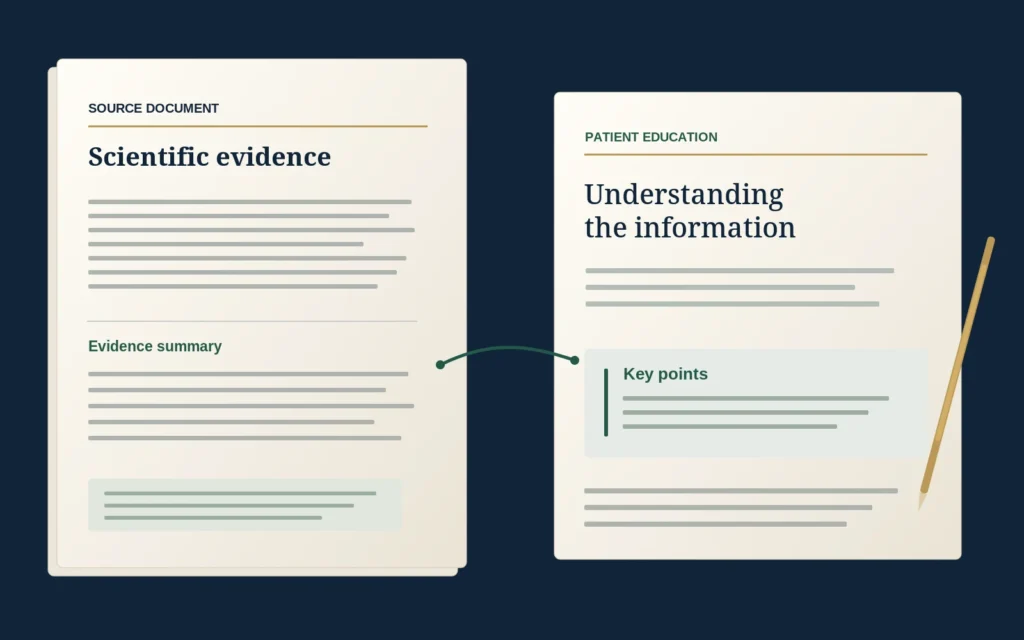
From Clinical Evidence to Clear Patient Education
Making clinical evidence easier to read is only the start. Explore how patient education can preserve qualifications, explain numbers, and serve a clear reader purpose.
Read article : From Clinical Evidence to Clear Patient Education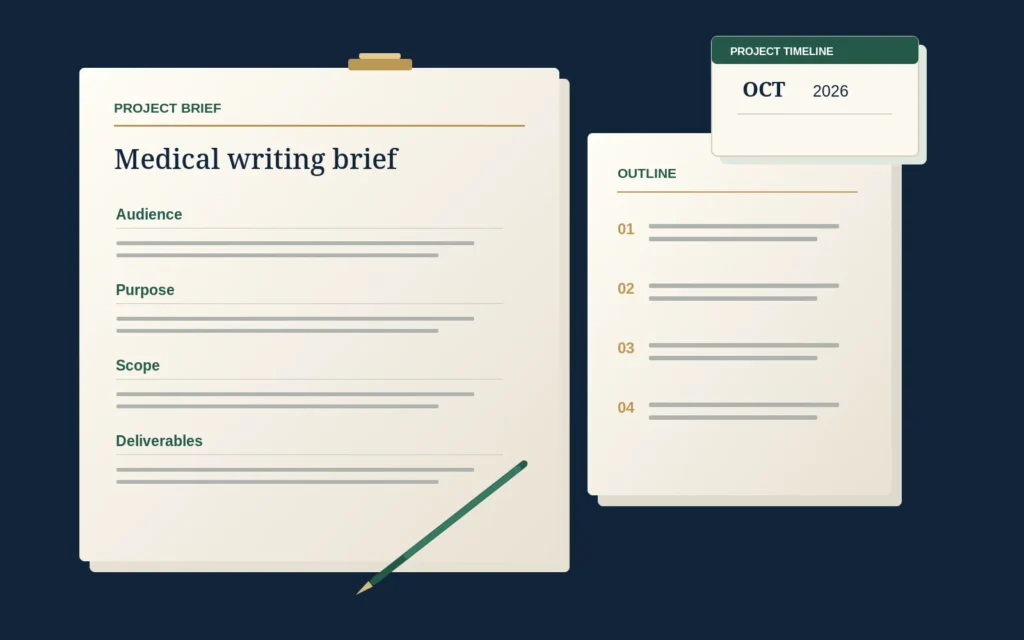
What to Include in a Medical Writing Brief
A topic, word count, and deadline are the beginning of a conversation. Use this practical guide to define the writing assignment before assumptions become revisions.
Read article : What to Include in a Medical Writing Brief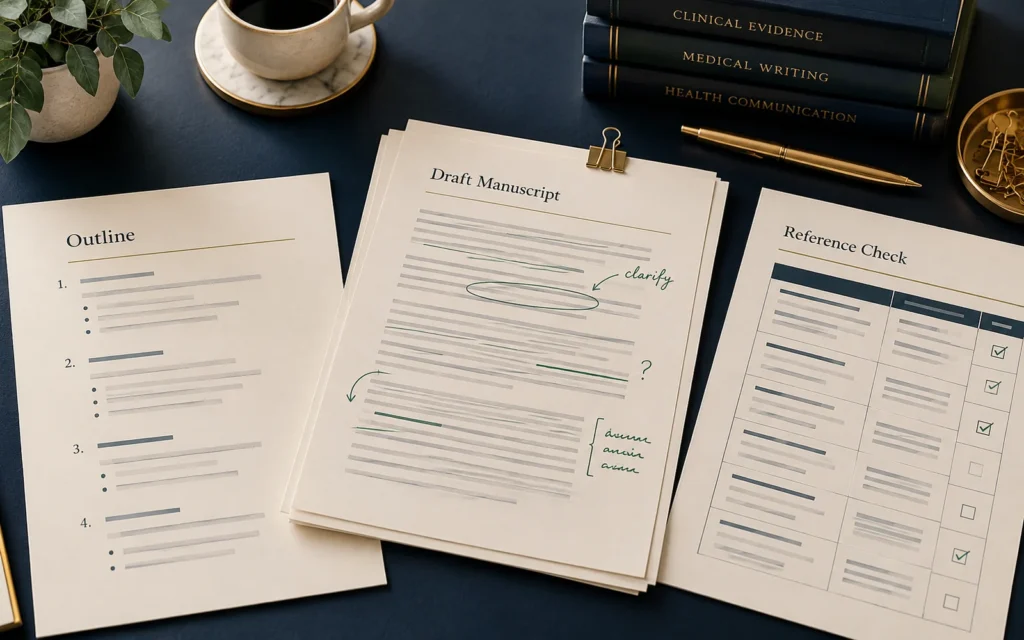
Medical Writing, Editing, and Clinical Review: Which Does Your Project Need?
“Please polish” can conceal three different assignments. Learn how writing, editing, and clinical review differ—and how to commission the work your document actually needs.
Read article : Medical Writing, Editing, and Clinical Review: Which Does Your Project Need?
What Does a Pharmacist Review in Medical Content?
A polished sentence can still need a clinical correction. Explore what a pharmacist reviews in medical content, how useful feedback looks, and what a client should receive.
Read article : What Does a Pharmacist Review in Medical Content?
Checking Medical References: Does the Source Support the Claim?
A citation can be relevant without supporting the sentence beside it. A practical guide to matching medical claims with evidence and leaving a useful editorial decision.
Read article : Checking Medical References: Does the Source Support the Claim?Need medical content written for your audience?
Commission a researched article or educational piece with supporting references and an agreed revision scope.