A patient resource needs more than accurate sentences. See how to commission clear, referenced materials built around your audience and their next step.
Quick answer
Patient education writing services produce audience-specific articles, handouts, FAQs, and other patient-facing copy. Define the reader, purpose, format, volume, sources, and deadline. Agree the written deliverables, references, revision rounds, and clinical approval route; design, translation, and audience testing require explicit scope.
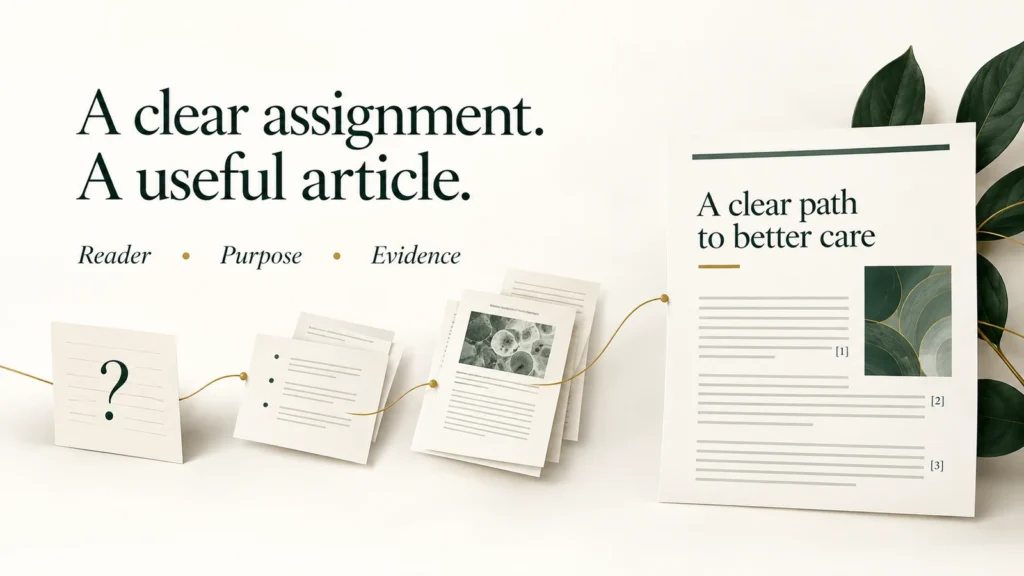
Patient education writing services turn clinical information into materials people can understand and use. For a healthcare team, the project starts with a practical question: what should this reader know or do after reading?
Picture a patient opening a beautifully branded handout. The condition is explained. The terminology is correct. Three paragraphs later, the reader still cannot find what to prepare for the next appointment. The content may be accurate, but the assignment is unfinished.
PharmacoLegal Consulting Services™ writes referenced patient-facing content for healthcare organizations, publishers, and agencies. Commission a new resource or request a rewrite of an existing one. Request a Patient Education Writing Quote with the topic, audience, format, and deadline.
What can you commission?
Start with the format your audience will actually encounter. A web article, a one-page handout, and a short video script make different demands on the same clinical information.
Patient education articles: focused explanations of a condition, treatment topic, or medication question.
Medication explainers: audience-appropriate descriptions of an agreed medication topic, with clinically important details preserved.
Appointment-preparation resources: questions to consider, information to bring, and an explanation of what the resource covers.
Patient FAQs: direct answers organized around the questions the intended audience needs addressed.
Handout or digital resource copy: structured text for your organization’s approved design and distribution process.
Content rewrites: revision of an existing resource for clearer meaning, organization, and next steps.
The proposal should distinguish writing from graphic design, translation, audience testing, and implementation. If your team needs any of those additional services, identify them before the assignment is agreed rather than assuming they are bundled into a writing fee.
Give the reader a task, not just a topic
“Write about this condition” is a topic. “Help adults prepare three questions for their follow-up appointment” gives the writer a purpose. It also gives your team a practical way to assess the draft.
The CDC Clear Communication Index asks whether material has a clear main message and an action for the audience.[1] That is a useful discipline for planning patient resources: decide what matters most before trying to fit everything onto the page.
Useful planning questions include: Who is reading? What do they already know? Where will they encounter the material? What should they remember? What is their next step? A resource handed out during a visit may need different context from a webpage found through search.
Original illustrative project brief; not a completed client assignment or clinical instruction.
Too broad
Write a patient handout about medication appointments.
Useful assignment
Write a one-page appointment-preparation resource for adults attending a medication-review visit. Explain the purpose of the visit, what information to bring, and three questions they may want to discuss. Use the organization’s supplied clinical guidance. Keep the copy suitable for a printed handout, with a separate reference list for the clinical team.
The improved brief names the reader, use, format, source expectations, and content task. It does not prescribe a generic reading level and hope the rest will take care of itself.
Short words can help. So can meaningful headings, a sensible order, and an explicit next step. A readability score is one check; your team still needs to assess whether the reader can find and understand the important information.
What should a patient education writing project include?
A PCS writing proposal can define the finished copy, supporting sources, and agreed revision process. For a typical resource, clarify these outputs before work begins:
Audience-specific copy: written for the agreed reader, purpose, format, and approximate length.
Usable structure: headings, main message, and next steps appropriate to the resource.
References: a source list or source notes in the format agreed with your team.
Editorial handoff notes: unresolved source questions or items requiring your organization’s confirmation.
Agreed revisions: the number of rounds, who consolidates feedback, and what counts as a change in assignment.
If the content also needs a separate clinical reviewer, establish that role and approval route. Writing, internal review, independent review, and organizational sign-off are different stages. Do not label a resource independently reviewed simply because it has been edited.
Keep the clinical meaning intact
Plain language should make the meaning easier to understand without changing its reach. A statement about one population should not quietly become advice for everyone. A cautious finding should not become a confident promise because the shorter sentence sounds smoother.
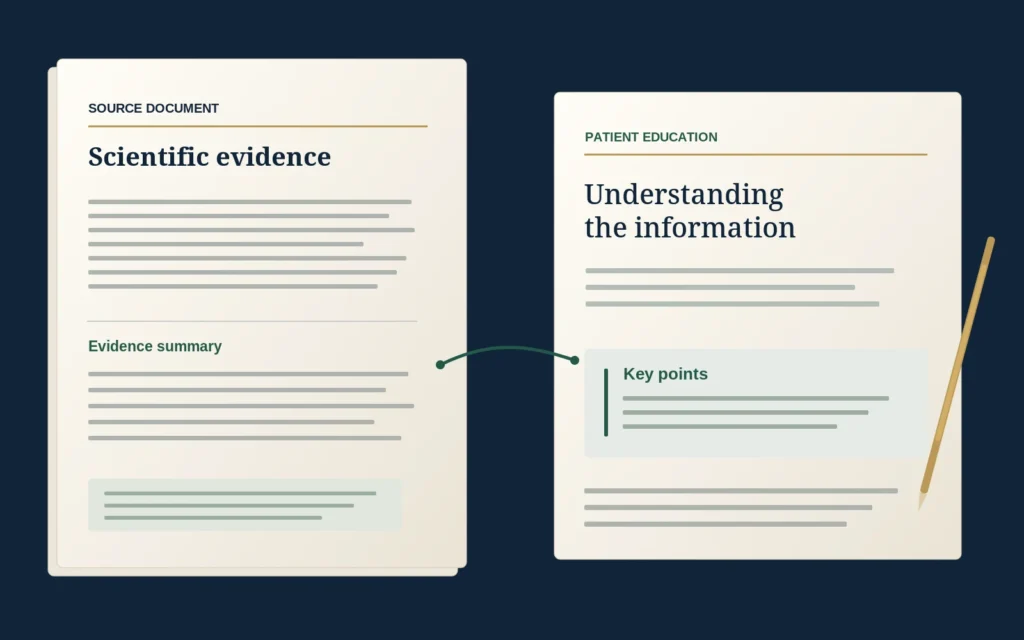
The source work matters here. Check that the reference supports the actual statement, including its population and important qualifications. The medical reference-checking guide explains that distinction.
For a medication resource, the exact content depends on the assignment. Confirm the relevant product, formulation, audience, and approved sources. General education copy should not accidentally read like individualized treatment instructions. If a clinical action or escalation instruction is needed, your team should confirm the applicable wording and approval process.
Plan approval before the first draft
Name one person to consolidate comments. Identify who approves clinical content, brand language, and the final version. Set the required reference style and tell PCS whether your organization has existing patient-language or accessibility standards.
If translation or audience testing is part of the project, plan it explicitly. A clear English draft does not establish that a translated version communicates the same meaning. Testing with intended readers, when commissioned, answers different questions from editing alone.
Agree who will own future updates. A resource can outlast the evidence or operational details it was based on. The medical website content update guide explains how to assess existing material when it needs attention.
How to request a patient education writing quote
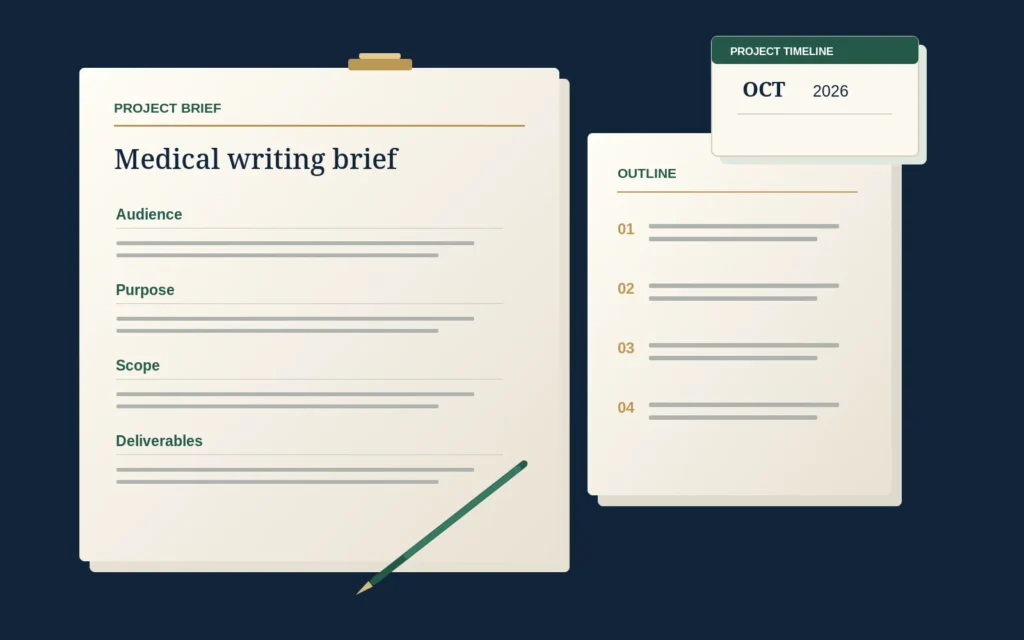
Send the topic, intended audience, format, approximate length or number of resources, available guidance, and deadline. If you have an existing draft, describe it first. The medical writing brief checklist can help your team gather the details.
PCS clarifies the work and proposes the deliverables, fee, timeline, and revision arrangements. Your team approves the assignment before writing begins.
Yes. Describe the audience, the current resource, and what needs to improve. PCS can propose a rewrite or a review of the existing copy. See writing, editing, and clinical review to distinguish the work.
Do patient materials still need references?
The clinical claims need a reliable evidence base. How the references appear to readers or in the editorial handoff depends on the format and your requirements. The reference-checking guide explains why source support matters.
Are design and translation included?
They are separate services unless included in the agreed proposal. A writing project can deliver structured copy for your design team. Identify any additional needs when you request a quote.
What does PCS need to estimate the project?
Send the topic, audience, format, volume, available source guidance, and deadline. Use the writing brief checklist, or start with a short description through the writing inquiry.
References
Centers for Disease Control and Prevention. CDC Clear Communication Index; Main message guidance; User Guide. Used for communication planning principles, not as an assertion that this article or a PCS deliverable has received a CDC score or endorsement.
Need medical content for your audience?
Commission referenced articles, medication explainers, or patient education with agreed revisions. Send your project details and deadline for a quote.
Scroll or swipe to explore related articles. When the article list is focused, use the left and right arrow keys; Home and End jump to the beginning and end.
An older medical article may need a targeted correction, a full rewrite, or a different place in the site. Use a practical review process to decide what changes and who handles the update.
A convincing draft still needs its claims checked. Explore the reference, clinical meaning, medication, and audience checks an AI-assisted medical article needs before publication.
You do not need a finished brief to start. Here is what to send, what a medical writing proposal should cover, and how an inquiry becomes a commissioned article.
A polished medication article can still imply more than its evidence supports. Six practical review targets reveal where meaning can shift—and how to document a useful correction.
Making clinical evidence easier to read is only the start. Explore how patient education can preserve qualifications, explain numbers, and serve a clear reader purpose.
A topic, word count, and deadline are the beginning of a conversation. Use this practical guide to define the writing assignment before assumptions become revisions.