What to Include in a Medical Writing Brief
A topic, word count, and deadline are the beginning of a conversation. Use this practical guide to define the writing assignment before assumptions become revisions.
Quick answer
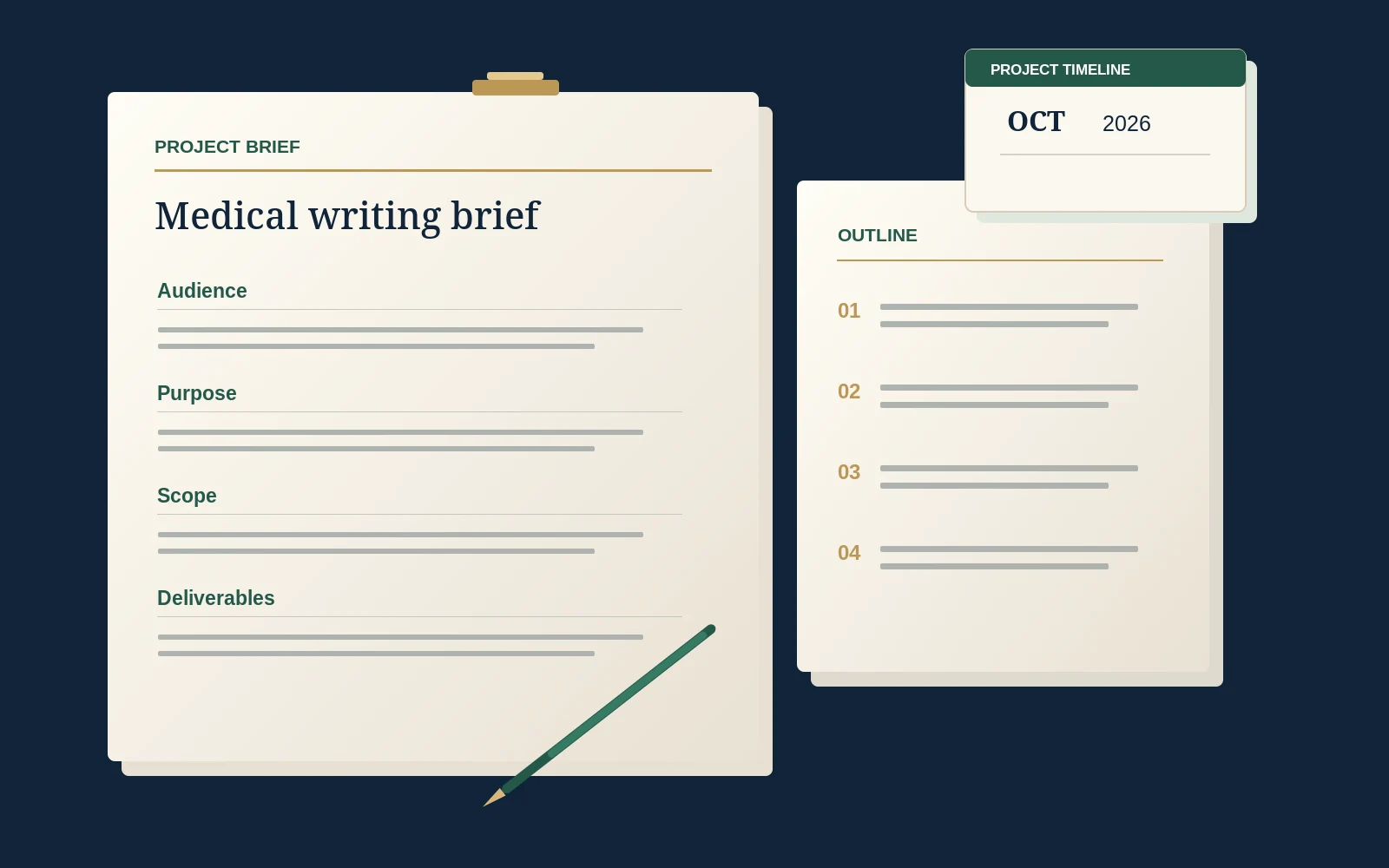
A medical writing brief should identify the primary reader, purpose, scope, evidence requirements, deliverable, reviewers, timeline, and engagement terms. Specify what is included, what is excluded, who approves the finished work, and how revisions or changes in direction will be handled.
A medical writing brief gives a writer the information needed to turn a topic into a defined piece of work. It should explain the reader, purpose, scope, evidence expectations, deliverable, and review process.
“We need an article about medication safety. Around a thousand words. By Friday.”
That sounds like a brief. It is actually the beginning of a conversation.
Which reader? Which medication-safety question? What must the article help someone understand? Is the writer researching from the beginning, adapting supplied material, or revising an existing draft?
A good brief does not need to become a novel about the article. It needs to settle the choices that would otherwise be made through assumptions, rewrites, and a crowded email thread.
Name the reader and the job the article must do
“Healthcare audience” leaves a great deal unresolved. A physician assessing a clinical summary, an editor planning a publication, and a patient seeking an explanation may need different information from the same subject.
State who the primary reader is, what they are likely to know, and the question they arrive with. Then identify the article’s purpose in one sentence.
CDC’s Clear Communication Index begins with audience, health-literacy considerations, communication objective, and main message.[1] Those questions are useful when defining a commission, even though a writing brief is not itself an Index assessment.
A useful purpose statement might be: “Explain what clinical content review includes so an editorial team can decide whether its existing medication article needs that service.” It is more actionable than “write an informative article.”
Turn the subject into a specific scope
List the questions the article must answer and the material it should not attempt to cover. If a topic is broad, agree on the angle before drafting.
For example, an explanation of how to interpret a medication-study abstract is different from a review of an entire therapeutic area. Word count alone will not resolve that difference.
Identify required concepts, exclusions, and any claims that need particular attention. If the piece discusses products, specify the relevant market or jurisdiction and the intended reference point. If you do not yet know the angle, include an outline-development stage in the scope.
Describe the evidence work you expect
Say what sources already exist and what research you are commissioning. A supplied reference list may be a starting point, a required source set, or material that needs assessment. Those are different instructions.
Clarify whether the work includes:
- Reviewing supplied documents and their relevance.
- Finding additional literature or authoritative resources.
- Checking selected statements or verifying every reference.
- Applying a particular citation format.
- Documenting source versions, publication dates, or search limits where relevant.
If the assignment requires a systematic review or a formal evidence-synthesis method, define that explicitly. Do not assume that asking for a “research-based article” commissions every possible level of literature work.
Define the deliverable, not just the word count
A word count tells the writer about space. It does not specify the finished product.
Describe the article format, approximate length, publication channel, tone, reference expectations, and any required components. Are a summary, FAQs, table, image brief, metadata, or additional audience version included?
For patient materials, consider the intended usefulness as well as readability. AHRQ’s PEMAT distinguishes understandability and actionability.[2] A brief can identify relevant communication goals without claiming that a particular assessment has already been conducted.
If you expect website-ready HTML, say so. If the deliverable is an editable manuscript, define that instead. “Ready to publish” should mean the same thing to both sides.
Identify the reviewers and final decision-maker
Explain who reviews the draft, what each person is reviewing, and who consolidates feedback. A clinical reviewer, brand editor, legal reviewer, and project owner may be looking for different things.
Specify the revision allowance and distinguish corrections from a change in brief. Adding a new audience, substantially different topic, or new source requirement after drafting may affect the scope.
Most importantly, name the final approval responsibility. A writer incorporating comments is not automatically responsible for an organization’s publication decision.
Give the project a workable sequence
Include the target publication date, but also the dates for source handover, outline approval, first draft, review, and final revisions where those stages apply.
A Friday deadline can mean several things: first draft delivered Friday, final copy approved Friday, or content already uploaded and scheduled Friday. Spell out which one you mean.
If reviewers need time between stages, include it. A schedule built only around the writer’s delivery dates leaves the rest of the workflow to chance.
Set the practical boundaries
Confirm the fee basis, payment arrangements, intended use, attribution expectations, and how confidential material will be handled. Those details belong in the agreed engagement terms; the brief should identify issues that need resolution.
If interviews, image creation, uploading, submission, or ongoing updates are expected, include them expressly. Avoid turning a writing commission into an open-ended list of everything that might happen before publication.
Share general project information initially. Agree on suitable arrangements before sending sensitive records, unpublished confidential material, or other restricted documents.
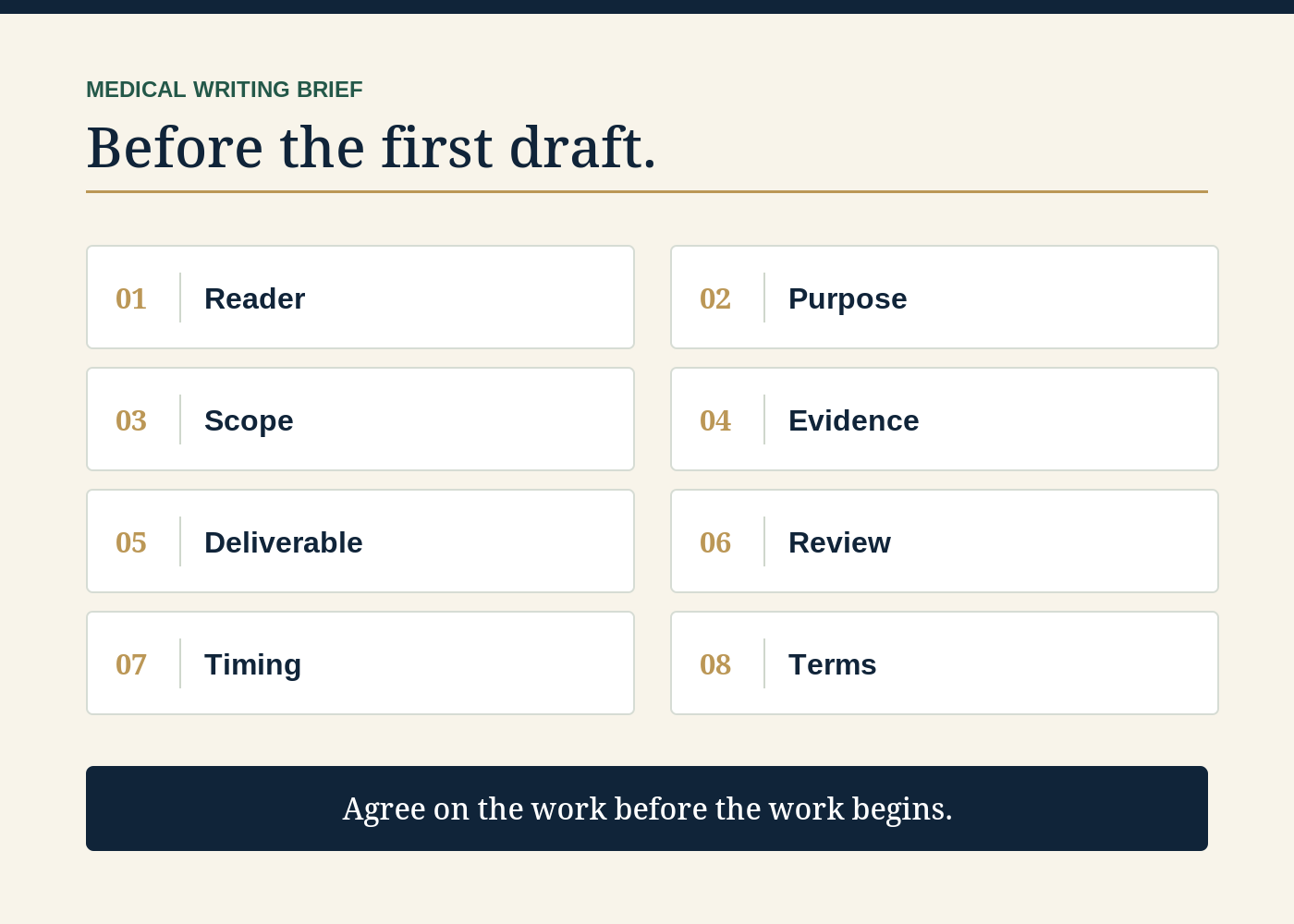
A concise medical writing brief template
Use these prompts as an original commissioning checklist, not a formal regulatory template:
- Reader: Who is this for, and what do they already know?
- Purpose: What question should the finished piece answer?
- Scope: What must be included, and what is excluded?
- Evidence: What sources are supplied, and what research or verification is required?
- Deliverable: What format, length, components, and reference style are expected?
- Review: Who comments, who consolidates feedback, and who approves?
- Timing: What are the draft, review, revision, and publication milestones?
- Terms: What fees, revisions, usage, attribution, and confidentiality arrangements must be agreed?
Not sure whether the project needs a new draft or a different kind of support? Compare medical writing, editing, and clinical review. For audience-specific decisions, see writing for physicians and patients.
A thoughtful brief does not remove every question. It makes the important questions visible while there is still time to answer them.
Frequently asked questions
Do I need a finished brief before contacting a writer?
No. A topic, intended audience, desired deliverable, and approximate timing are useful starting points. Any unresolved research or scoping work should be identified before the engagement is agreed. Explore medical writing services.
Should I supply all the references?
Supply relevant materials you already have, but clarify whether the writer should find additional sources or assess the supplied ones. A reference list does not automatically define the research scope.
Does a writing brief include clinical review?
Only when that work is specified. Drafting, editing, and checking clinical statements are related but distinct tasks. See what a pharmacist reviews in medical content.
What if the article changes direction after the first draft?
Discuss the change against the agreed scope and revision arrangements. A new purpose or audience may require a revised brief, fee, or schedule rather than being treated as a minor wording change.
References
- Centers for Disease Control and Prevention. How to Use the Index.
- Agency for Healthcare Research and Quality. How To Use the PEMAT To Assess a Material.
Need medical content written for your audience?
Commission a researched article or educational piece with supporting references and an agreed revision scope.
More from the Review
Scroll or swipe to explore related articles. When the article list is focused, use the left and right arrow keys; Home and End jump to the beginning and end.

Common Accuracy Problems in Medication Content
A polished medication article can still imply more than its evidence supports. Six practical review targets reveal where meaning can shift—and how to document a useful correction.
Read article : Common Accuracy Problems in Medication Content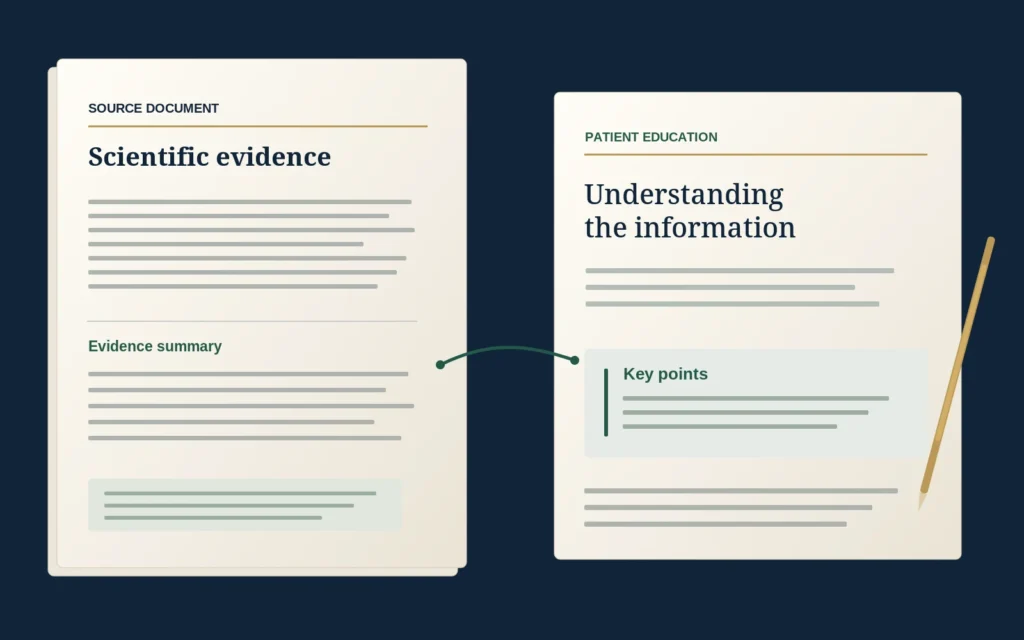
From Clinical Evidence to Clear Patient Education
Making clinical evidence easier to read is only the start. Explore how patient education can preserve qualifications, explain numbers, and serve a clear reader purpose.
Read article : From Clinical Evidence to Clear Patient Education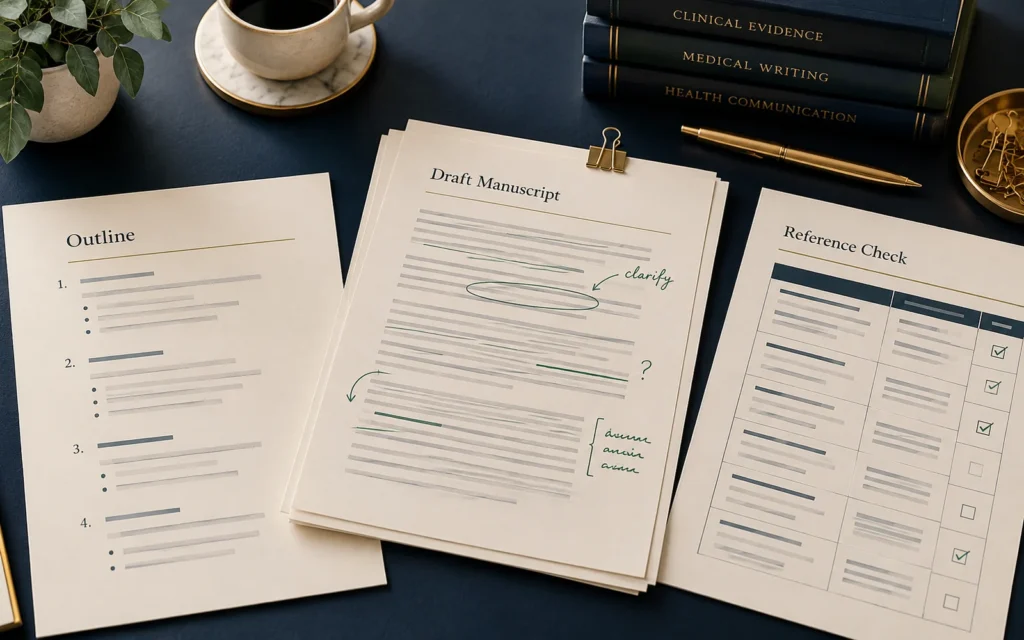
Medical Writing, Editing, and Clinical Review: Which Does Your Project Need?
“Please polish” can conceal three different assignments. Learn how writing, editing, and clinical review differ—and how to commission the work your document actually needs.
Read article : Medical Writing, Editing, and Clinical Review: Which Does Your Project Need?
Writing Medical Articles for Physicians and Patients: What Changes?
The same evidence can serve different readers without becoming the same article. Explore how audience changes structure, terminology, and clinical explanation.
Read article : Writing Medical Articles for Physicians and Patients: What Changes?
What Does a Pharmacist Review in Medical Content?
A polished sentence can still need a clinical correction. Explore what a pharmacist reviews in medical content, how useful feedback looks, and what a client should receive.
Read article : What Does a Pharmacist Review in Medical Content?
What a Useful Clinical Review Report Should Include
Clinical feedback is useful when the next decision is clear. Explore the scope, evidence, findings, proposed actions, and handoff a practical review report should contain.
Read article : What a Useful Clinical Review Report Should Include